



You may think that your organization’s knowledge base holds all of the information your team needs to succeed, but that would be wrong. Your team’s most valuable knowledge lives within their brains and daily workflows. Documents and slide decks can only hold so much value, and the team holds the key to the rest.
So, how can your team find and share this knowledge with the other members without setting up face-to-face meetings every time? That’s where screen capture comes in. Whether it’s a quick video walkthrough, a series of annotated screenshots, or a narrated screen recording, visual communication bridges the gap between institutional knowledge and scalable documentation. Screen capture is one of the fastest, clearest ways to transfer know-how across teams—especially in fast-paced, remote, or cross-functional environments.
Why knowledge sharing breaks down in most teams
Even teams with strong documentation practices hit a wall when it comes to sharing real-world knowledge. Written content can’t always capture the nuance of a software tool or explain a task’s specific context. Visual knowledge often gets left out, leaving team members guessing or just asking someone directly, interrupting their workflow.
Key processes rely on institutional knowledge
So much of what makes people effective at their jobs isn’t found in standard operating procedures (SOPs) or wikis. It’s the keyboard shortcut that saves 30 minutes a week, the workaround for a system limitation, or the step in a setup flow that only the IT lead knows to double-check. These details live in people’s heads and come out only when someone asks or when something breaks.
Without a way to capture and share that context visually, companies risk losing critical knowledge every time someone switches teams, leaves, or gets too busy to explain things repeatedly.
Repeat questions are a real productivity killer too. TechSmith’s Workplace Flexibility Report discovered that six unwanted interruptions a day cost a company with 1,000 employees 1 million dollars in productivity. That’s a whole lot of time and money wasted on simple questions.
Record your screen with Snagit
Snagit makes it easy to share quick updates and how-to’s by capturing exactly what’s happening on your screen.
Get Snagit
Documentation is too slow to keep up with change
Many teams struggle to keep their documentation updated. Product updates, new tools, and shifting workflows make it hard for written SOPs and wikis to stay relevant.
Fast-moving tech environments, especially AI-powered platforms, need constant documentation updates to keep up with the ever-changing workflows. Text documents fall out of date almost as quickly as they get published, which makes their creation usually not worth the effort.
By contrast, a quick screen capture takes way less time to create and is more likely to reflect the current reality, making it far more useful in the moment. Plus, screen captures are easier to replace than text-heavy documentation. One screenshot and you’re done; that’s a huge difference from rewriting an entire wiki.
Asking for help becomes the default workflow
When documentation isn’t visual, fast, or contextual enough, people default to pinging teammates, jumping on Slack threads, or scheduling unnecessary meetings. That’s not just inefficient, but it also drains time from subject matter experts and creates bottlenecks everywhere
Screen recordings and annotated screenshots reduce the need for real-time assistance. Instead of explaining the same process 10 times, you can create a high-quality tutorial once and share it with the entire team and embed it into a knowledge base for future use.
Step capture is one of Snagit’s stand-out features for this specific issue. With step capture, you can click through a process once and Snagit records every click, then turns it into an editable step-by-step tutorial template. The document can be edited any time (even a year later!) so you’re sure to always have your documentation up to date.
How screen capture turns knowledge into reusable assets
Screen capture tools allow teams to turn what was once one-off advice into durable, shareable knowledge assets. With just a few clicks, anyone can start recording, annotate key moments, or capture the entire screen to walk through a process.
Record quick demos on how to complete tasks
Imagine showing someone how to configure a browser extension or troubleshoot a mac-specific setting. A screen recording can do in 2 minutes what might take a 10-step email or a half-hour call. And the recording is reusable for the next person who runs into the same issue!
Many teams use Camtasia to create polished walkthroughs for internal training, onboarding, or cross-functional support. Others lean on Snagit for quick, informal recordings they can share instantly over Slack or embed into a knowledge base. Creating a screen recording once can eliminate dozens of repetitive questions.
Another alternative is Camtasia online, a free, browser-based video recorder that is perfect for quick walkthroughs that don’t need a lot of editing, but still need to look professional. Like other TechSmith products, the videos are shareable through Screencast, so you still get the benefits of collaboration.
Need to show your screen?
Skip the downloads. Use Camtasia online to record your screen, camera, and microphone right in your browser for free.
Start Recording
Capture one-off answers and turn them into reusable content
Every team has a go-to expert who gets the same questions again and again. Instead of retyping or repeating the same answers, they can record their screen once and use that clip whenever the question comes up.
The efficiency is not having to answer the same questions over and over; instead, they can refer someone to the training video. These video recordings often become the building blocks for employee training libraries or process documentation templates.
Whether you use Camtasia or Snagit to create your video walkthroughs, you’ll be able to send them right to Screencast for sharing and safe keeping. With a simple link, you can send your video to your team member where they’ll be able to leave time-stamped comments if further clarification is needed.
Screencast also has collections that keep your videos organized by topic and audience so you only share them with the people who need it. For example, you can share a single video to your team member who is struggling with a software login, or you can send them a collection of commonly troubleshooted questions so they have all the knowledge ready for them to learn from.
Looking for professional screen recording software?
From simple screen captures to polished video editing, TechSmith has everything you need to create professional-quality content.
Learn More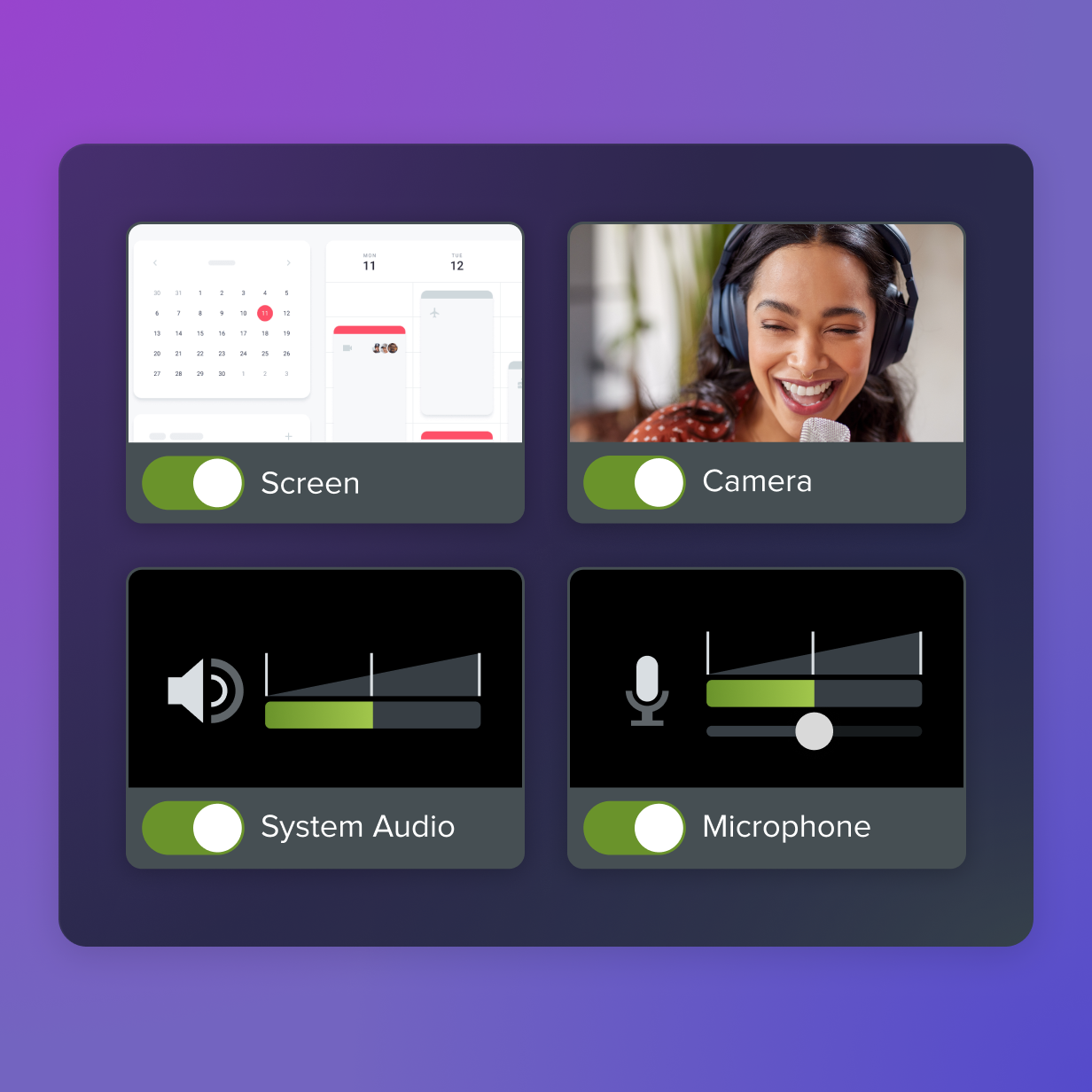
Pair screen capture with screenshots for fast clarification
Sometimes, a full video isn’t necessary. Annotated screenshots—especially with arrows, callouts, and highlights—are perfect for step-by-step tutorials or troubleshooting tips. With tools like Snagit, users can quickly grab a screenshot, annotate it, and share it via email, Slack, or embedded in a knowledge base.
Combining video recording with static images offers the best of both worlds: fast context with minimal effort. A 30-second video paired with a few annotated screenshots can save hours of back-and-forth conversation.
When and where screen capture works best for sharing knowledge
Screen capture isn’t just for tech support or IT teams. Its speed, clarity, and reusability make it a powerful asset across departments—whether you’re training new hires, documenting evolving processes, or supporting customers.
New hire ramp-up and cross-training
New employees need more than instructions. They need context. A short video showing how a tool is used in the real world can accelerate onboarding significantly.
Instead of just reading a list of steps, new hires can see how a task is done. Screen recordings also help with cross-training, letting team members learn each other’s workflows without live shadowing sessions.
Process documentation and tool walkthroughs
Documenting how to use internal tools or explaining SOPs is much easier with visuals. Many teams start with Snagit to storyboard a workflow using screenshots, then turn to Camtasia for creating full SOP tutorials with polished transitions and templates.
This is especially helpful when tools are updated regularly or when multiple departments interact with the same system. With screen capture, documentation stays relevant and clear—even as functionality shifts.
Answering support questions or recurring requests
Customer support and internal help desks benefit enormously from video recordings. Instead of typing out long troubleshooting instructions, agents can record a quick screen capture showing how to fix an issue or configure a setting.
These videos not only speed up responses but can be added to a knowledge base, turning one-off solutions into company-wide resources. With webcam and microphone support, even remote-first teams can add a human touch to technical responses.
Build a habit of knowledge sharing with the right tools
Great knowledge management isn’t about writing more docs, it’s about making information easier to create, understand, and share. Screen capture lowers the barrier to documenting what people know, transforming everyday know-how into assets the whole organization can use.
TechSmith tools like Snagit and Camtasia make it easy for anyone to create tutorials, walkthroughs, and support videos without needing a video editing background. With AI-powered features, prebuilt templates, and support for full screen or specific app recording, even first-time users can produce high-quality results in minutes.
Build your next training video with Camtasia
Record your screen or camera. Then, use the video editor to add polish and clarity.
Learn More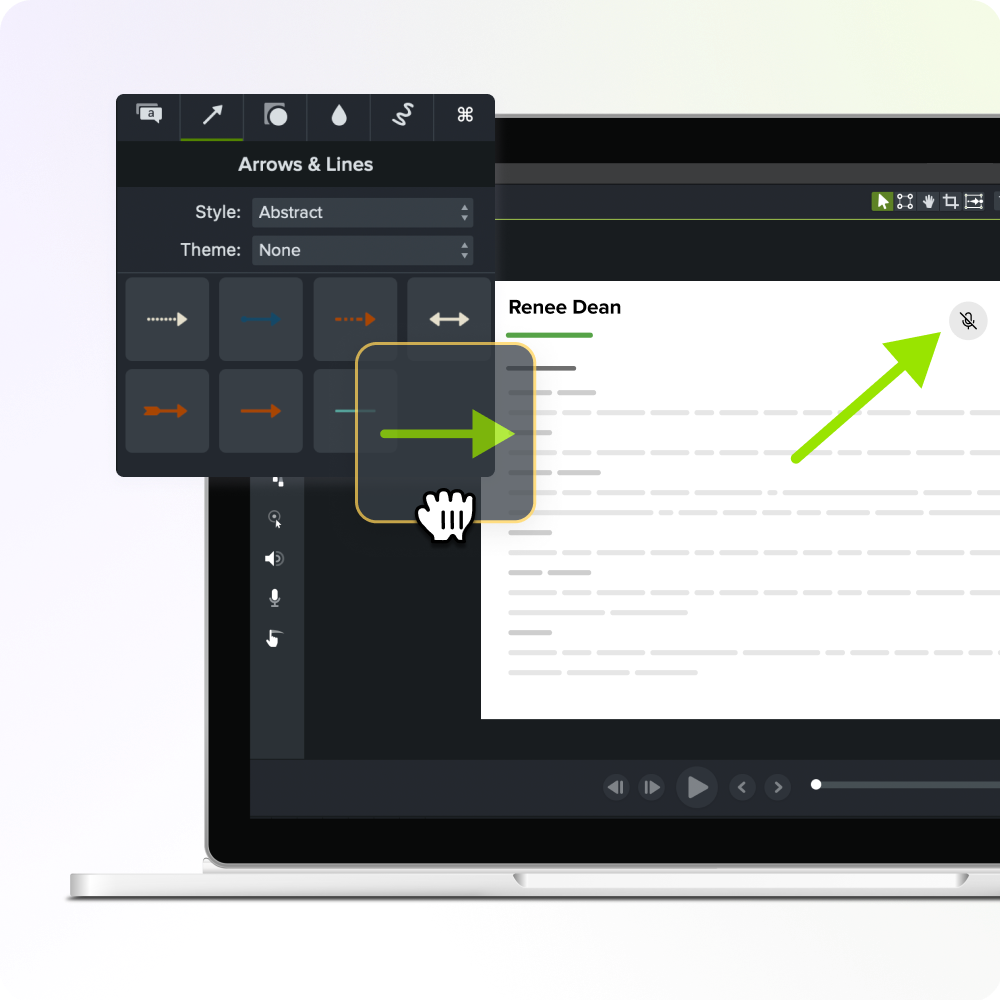
Whether you’re capturing your entire screen for a full demo or just grabbing a quick screenshot, the key is to make screen capture a daily part of your workflow. When teams build a culture of showing, not just telling, they reduce repeated questions, speed up onboarding, and unlock scalable collaboration.
Make screen capture part of your team’s knowledge-sharing toolkit. With TechSmith’s user-friendly tools like Snagit for quick screenshots and video recordings, or Camtasia for more polished tutorials you can start turning everyday knowledge into lasting value.
Explore all TechSmith products and see how they fit into your workflow.
Share