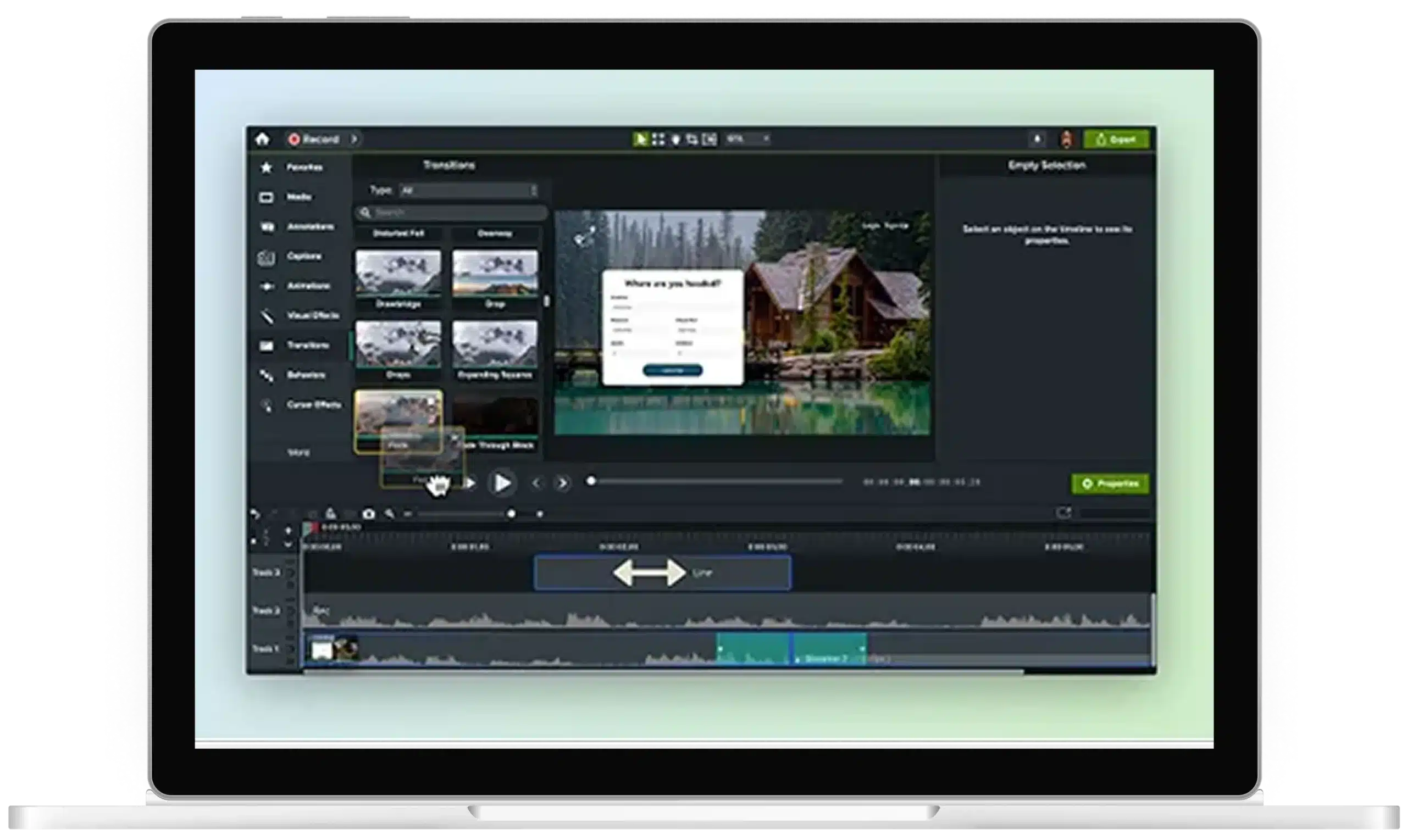






Compress video files without leaving your editor
Reduce file size and keep your content share-ready. With Camtasia, you can edit and compress video files all in the same convenient platform. Reduce video file size with just a few clicks, save storage space, and enjoy faster uploads.

Why are my video files too large to send?
Video files contain far more raw data than email platforms allow. Most training videos exceed attachment limits within minutes of recording, forcing L&D teams into a repetitive compress-export-resend loop that wastes hours per project cycle. For L&D teams producing full-length course modules or multi-chapter training content, file size compounds quickly. A single 30-minute training video can easily hit 500 MB to 2 GB depending on quality settings, making it impossible to share directly. This creates a recurring workflow blocker: instructors re-export at lower quality, review feedback arrives inconsistently, and back-and-forth delays stretch timelines. Camtasia removes this loop entirely by compressing video directly in the editor.
How to compress video files in Camtasia
Camtasia Editor lets you reduce your video file size by manually adjusting resolution, frame rate, bitrate, and export format right from the export panel.

Lower the resolution
Lowering video resolution reduces the number of pixels in your video.

Decrease the frame rate
Reducing the frame rate from 60 fps to 30 fps halves the number of frames in your video.

Adjust the bitrate
This is the amount of data the video transmits per second, and adjusting it has the biggest impact on file size.

Select the best export format
Camtasia supports a wide range of video formats, including MP4 and MOV, but MP4 with H.264 (YouTube’s recommended format) generally provides the best balance of file size and quality.
Compress video for email, batch export, and more
No matter what your video-sharing workflow looks like, Camtasia makes it easy to compress your files.- Compress screen recordings and share them quickly through email or chat apps without worrying about blurred text or imagery.
- Adjust bitrate, resolution, and frame rate to meet your target file size for a specific platform.
- Compress a folder of training modules in one pass, using per-project presets to maintain different compression settings for each video.

Start your Camtasia trial
Ready to compress and share your next training video? Try Camtasia Editor for free to keep your entire workflow, from editing to compression, all in one place.