







You’re comparing CYPHER Learning against Axonify, or maybe 7taps, trying to decide which system will finally get short training videos in front of your team without a six-month rollout. Every vendor demo looks polished until you ask how your team will produce the videos, and the answer gets vague fast.
Microlearning platforms are LMS, LXP, or delivery-first systems that distribute, manage, and track short learning assets. Most include basic authoring features, but they rarely give you what you need to produce clear, accessible, easy-to-update video at the pace a training program demands.
That gap shows up later, usually after a policy changes and someone has to re-record a module nobody remembers building.
Key takeaways
- Microlearning platforms typically deliver, track, and manage training, while dedicated creation tools produce the videos and assets learners see.
- A strong microlearning strategy evaluates content quality and production workflow alongside platform features such as reporting, gamification, and adaptive learning paths.
- Short-form video can make microlearning processes easier to follow by combining screen demonstrations, narration, captions, and focused visual context.
- Camtasia Online uses five-minute scenes and browser-based recording to help teams create short microlearning videos without installing software.
- The Camtasia Product Suite can support scaled production through reusable visual styles, AI-powered editing, faster narration cleanup, and quick screenshot-based job aids.
What people mean by microlearning platforms
When you evaluate microlearning platforms, separate the system that delivers and tracks learning from the workflow that creates and maintains the assets learners receive. You may be comparing delivery systems without yet testing how you’ll produce or update the video inside them. Before you commit, ask who creates assets, whether exported video stays portable, and who owns accuracy. For the foundations of segment length and format, see this microlearning overview.
LMS and LXP systems built for delivery and tracking
LMS and LXP systems are designed to enroll learners, distribute content, organize learning paths, and track participation or compliance across a workforce. That’s their job, and it’s a big one.
Before comparing creation tools, map these delivery capabilities against your organization’s actual requirements:
- Learner enrollment and permissions
- Mobile access and distribution
- Reporting and analytics dashboards
- Compliance tracking and completion records
- Adaptive or sequenced learning paths
- Learner administration and notifications
None of this guarantees your videos are clear, current, or accessible. A platform can enroll every employee and log perfect completion data while playing a demo with outdated screenshots and no captions.
Build your next training video with Camtasia
Record your screen or camera. Then, use the video editor to add polish and clarity.
Learn More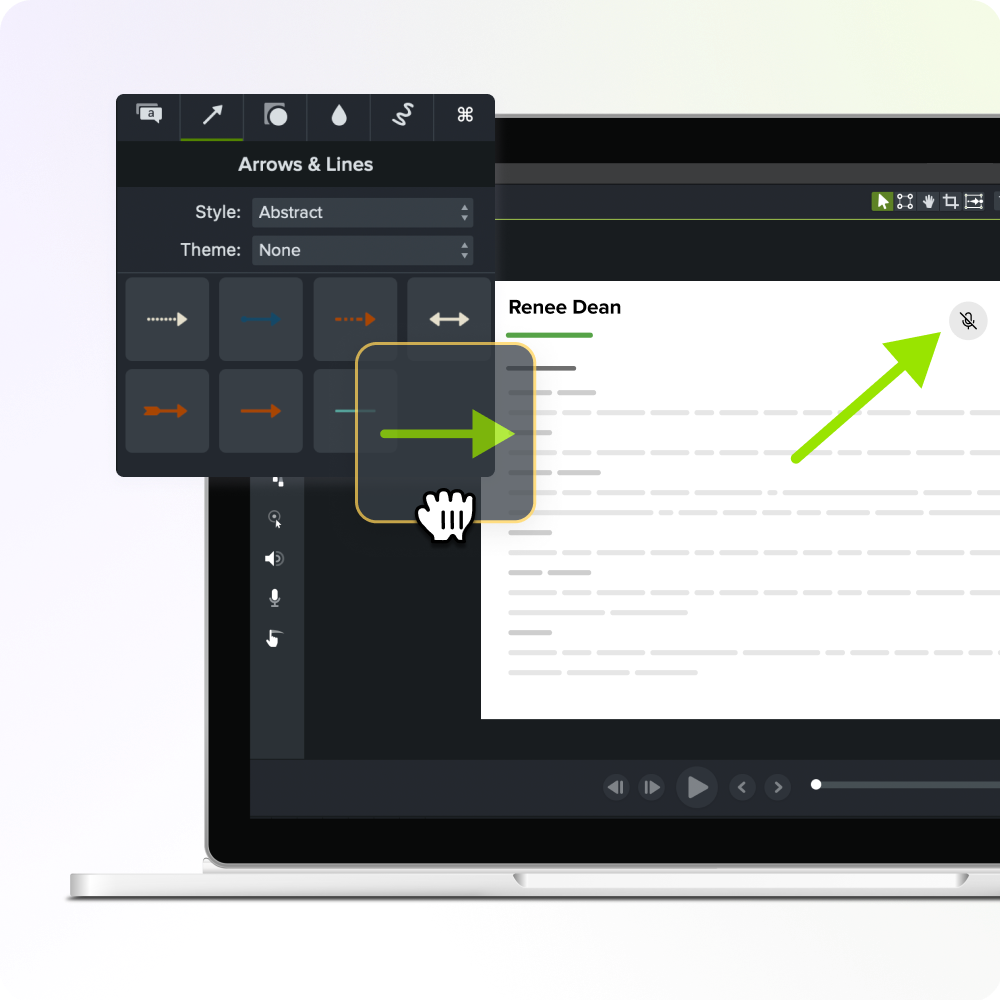
Where platform comparisons stop short
Most microlearning platform comparisons evaluate where content goes but not how quickly your team can create, update, brand, and caption it. A platform picked only for delivery features leaves you with a working LMS or LXP and a stalled production process behind it.
Before: A policy changes, and the update sits in a queue for weeks because no one owns editing. Captions are added as an afterthought, and every module looks like it came from a different team.
After: The same team tests update effort, captioning support, brand consistency, and repeatable publishing before signing a contract.
Consider adding four rows to your procurement scorecard: update turnaround time, caption workflow, brand template reuse, and publishing repeatability across creators.
The production gap platform comparisons overlook
A strong delivery platform can’t rescue unclear, outdated content. Production quality determines what learners actually experience. A slow workflow leaves outdated captions, mismatched branding, and stalled approvals sitting inside an otherwise capable LMS. A maintainable workflow lets a team revise one asset and republish it the same day.
Two production decisions drive that difference: how you plan segment length and structure, and which format fits each learning objective. Both shape whether learners adopt the training.
Why segment length and format matter more than the platform
A useful microlearning segment runs only as long as it takes to teach one observable task or decision. That’s the design question that determines whether a video helps someone at the moment of need.
Once you’ve defined that single task or decision, three to five minutes works well for most software walkthroughs, policy updates, and quick coaching moments. Treat it as a default setting rather than a requirement for every recording.
Some topics need more room. If a task involves several decision points, exception handling, or unfamiliar terminology, don’t compress it into an artificially short clip. Add a short context intro, a practice prompt, or a linked follow-up asset instead of cutting instruction the learner needs.
Video compared with quizzes, flashcards, and text summaries
Video best supports demonstrations, quizzes support retrieval, flashcards support recall, and text summaries support quick reference. Each format does one job well, and matching the format to the learner’s action prevents wasted production time.
- Video: Shows sequence, interface changes, cursor movement, or a human explanation
- Quiz: Verifies retention or checks a decision was applied correctly
- Flashcard: Reinforces recall of terms, steps, or short facts
- Text summary: Supports quick lookup after the learner already understands the task
Reach for video when a step is hard to describe in words, and read more on why instructional video works for demonstrations. Add captions every time, since some learners depend on them and others simply prefer them. Pair the video with a short quiz when learners also need to prove they can apply the task instead of only watching it.
A two-tool framework for microlearning success
Most microlearning programs need two connected layers. One delivers and measures learning, while the other creates the learning assets. The delivery and measurement layer handles enrollment, tracking, and reporting. The content creation layer handles scripting, recording, editing, and captioning.
Document each layer’s responsibilities, required outputs, owner, and handoff point. Buying a platform alone can lock you locked into one vendor’s tools. Building a separate creation layer keeps your videos and visual assets portable if you switch delivery systems later.
| Layer | Responsibilities | Required Outputs | Owner | Handoff Point |
| Delivery and measurement layer | Enrollment, tracking, and reporting | Completion records, analytics dashboards, compliance data | Platform or LMS/LXP administrator | Flags when an asset needs creation or updating, then routes the request to the creation layer |
| Content creation layer | Scripting, recording, editing, and captioning | Portable, branded, captioned video or visual assets | L&D content creator or trainer | Publishes the approved, exported asset back into the LMS or LXP |
What your delivery platform is designed to handle
Your delivery platform manages learner access, sequencing, notifications, analytics, compliance records, and mobile availability. It handles the enrollment, tracking, and administrative capabilities covered earlier, giving it the authority to control permissions and deliver the right content to the right learners at the right time. According to this LMS or LXP guide, the system itself is an empty vessel until your video assets fill it.
Before you sign a contract, run this check:
- Verify which video formats the system supports for upload and streaming.
- Test how it handles caption files, including format and display.
- Check file size limits and embedding options for external video.
- Confirm what analytics you’ll actually see on completions and drop-off.
- Try replacing an existing asset without breaking its course placement.
Any gaps here define what your creation workflow needs to hand off cleanly.
What a dedicated creation tool adds
A dedicated creation tool turns subject matter into portable, branded, captioned assets that can be reviewed and published in whichever LMS or LXP your team uses. It handles scripting, screen capture, narration, editing, captions, branding, accessibility checks, and export prep, tasks no delivery platform performs for you.
The handoff runs in order:
- Plan and script the asset.
- Record and edit it.
- Add captions and approved branding.
- Export a portable file.
- Route review through Screencast.
- Publish the approved asset in your LMS or LXP.
Camtasia Snagit fits earlier in that sequence, producing quick screenshots and step-by-step visual job aids for tasks that don’t need full video.
Because the exported file is portable, your captions, branding, and edits travel with it. Switch delivery systems later, and the asset still works.
Camtasia Online as a starting point for microlearning video
Camtasia Online gives teams a fast creation layer for short microlearning videos. It works in a browser, without installation. Open Camtasia Online in a browser, record at 1080p, and keep screen, webcam, and audio on separate layers for easy cleanup. Share the finished clip instantly.
Two design choices decide whether it fits your module: its scene-based structure and its low-friction recording workflow.
Make great educational videos
Create engaging videos that drive student success with Camtasia’s easy drag-and-drop editing.
Free Download
Scene-based recording built for short segments
Camtasia Online caps each scene at five minutes to keep every recording focused on one task, one decision, or one demonstration. That limit forces you to cut the setup, skip the tangents, and get to the point learners need.
Scenes are unlimited, though, so a project can still include the context a topic requires. Record a short intro scene, a demonstration scene, and a recap scene, then stitch them together without cramming everything into a single five-minute take.
Use this four-part pattern for each module:
- State one objective.
- Demonstrate one workflow.
- Recap the action.
- Direct the learner to practice.
The five-minute limit shapes how you produce each scene. It doesn’t require every finished project to end at five minutes.
Browser-based capture with nothing to install
Camtasia Online lets subject matter experts capture a screen, webcam, and microphone directly in a browser, then apply lightweight polish without downloads, subscriptions, or watermarks. That matters for L&D teams because your SMEs rarely have admin rights to install software, and waiting on IT approval delays every module by days.
Once the recording is done, Camtasia Online’s built-in tools add basic polish fast. Creators can choose from 85+ design looks, swap in a customizable background, trim dead air from the start or end, and apply a one-click layout that arranges webcam and screen footage automatically.
Pick one recurring task, such as a software walkthrough or a policy explainer, and have the SME record it in Camtasia Online this week. Review the output before you decide whether this workflow becomes your team’s standard for lightweight microlearning.
Camtasia Editor for consistent microlearning at scale
Camtasia Editor supports microlearning programs requiring deeper control and repeatable output. Use it when team standards require full timeline editing. Separate tracks, templates, captions, annotations, and cursor effects let a team apply the same visual rules to every module instead of rebuilding decisions each time.
Seat-level licensing supports this: Assign it to the L&D staff who build training regularly, keeping deployment targeted rather than organization-wide.
AI-powered editing that speeds up production
AI-assisted editing speeds production by automating repetitive cleanup while keeping instructional clarity and human review in the workflow. In Camtasia Editor, automated captions save you from typing out narration by hand, background noise removal cleans up hums and room echo, and Screentelligence cursor effects highlight clicks and pathing automatically so learners can follow along in a software demo without you hand-drawing every callout.
Narration and translation work sit in Camtasia Audiate. Transcription, AI voice generation, avatars, and multilingual translation are also in Camtasia Audiate, available through an eligible Camtasia plan tier or as a standalone product.
Use learner drop-off points or replay data to target revisions instead of full rebuilds. Check where viewers replay or exit a segment, open just that portion of the timeline, and fix the confusing moment. For more on reading those engagement signals, see this guide on interactive training videos.
Saved user styles for team-wide consistency
Saved user styles and a shared visual checklist help multiple creators apply the same approved treatments without rebuilding them for every video. In Camtasia Editor, save and favorite your approved annotation and callout presets so every creator pulls from the same colors, fonts, shapes, and treatments instead of guessing at brand standards each time they open a new project.
Put those decisions in writing. Build a shared checklist that covers caption formatting, approved callout styles, cursor emphasis for click paths, and standard intro and outro templates, so a new hire and a five-year trainer produce visually identical output.
Assign one person to own that checklist. Give them authority to update presets when branding changes and to retire outdated styles, so consistency survives staff turnover instead of eroding one video at a time.
Camtasia Audiate and the narration bottleneck
Narration often slows microlearning production through retakes and timeline searches. Camtasia Audiate turns spoken content into editable text.
Before: A trainer scrubs the timeline hunting for one outdated phrase, re-records a full take, and re-syncs audio to video by hand.
After: That same trainer edits a transcript and the audio updates to match.
Policy updates, software changes, and process revisions hit L&D teams constantly. Transcript editing and AI-assisted narration cleanup make those updates fast enough to publish on schedule.
Text-based editing for faster turnaround
Deleting words from a transcript removes the matching audio automatically, so correcting narration means editing text instead of hunting through a waveform. Your compliance team updates a reporting policy referenced in a training module. The update follows this sequence:
- Open the transcript and locate the outdated instruction.
- Delete or rewrite the wording directly in the text.
- Synchronize the corrected audio and transcript into Camtasia Editor.
- Review captions and timing to confirm the edit lines up cleanly.
- Republish the module.
Synchronizing the edit into Camtasia Editor keeps your project file, branding, and timeline intact, so you’re revising one asset rather than rebuilding it.
Reviewing timing and captions before you republish matters because a deleted phrase can shift caption sync by a frame or two. A quick pass through the timeline catches that before learners see it.
One-click filler word removal and AI voice generation
One-click filler word removal cleans up narration fast while keeping the natural, approachable delivery that makes microlearning feel human. In Camtasia Audiate, select the filler word detection tool, review the flagged instances, and apply the removal in one pass instead of scheduling a retake for every “um” or “you know.”
AI voice generation covers two specific situations: an approved script revision where re-recording the original narrator isn’t practical, and multilingual versions of a module for a global workforce. Generate the voice track in Camtasia Audiate, then drop it into the existing timeline.
Before publishing anything with an AI-generated voice:
- Review pronunciation of names and technical terms.
- Confirm the meaning matches the approved script.
- Check timing against on-screen visuals.
- Verify caption accuracy.
- Add any required AI-generated content disclosure your organization mandates.
Your platform is only half the strategy
Your LMS or LXP handles delivery. Camtasia strengthens the creation layer that determines content clarity, accessibility, consistency, and update speed.
Camtasia Editor’s saved annotation styles and Camtasia Audiate’s text-based editing exist for that gap, letting one person maintain a library of short lessons without re-learning a timeline every time something changes. That’s the test that matters before you sign an LMS contract: whether your team can keep its content current a year from now, more than whether the platform looks good in a demo.
Run that test on a real module this week. Start editing your next microlesson for free with Camtasia.
Frequently asked questions
What are microlearning platforms?
Microlearning platforms deliver, track, and manage short learning assets through an LMS or LXP. They may also support mobile delivery, gamification, spaced repetition, reporting, adaptive learning paths, and compliance workflows. They do not necessarily provide the dedicated recording and editing tools required to produce polished training videos.
What should you look for in the best microlearning platforms?
Look for a microlearning platform that matches your workforce, learning goals, administration needs, and reporting requirements. Compare mobile access, learner engagement features, spaced repetition, adaptive paths, compliance tracking, integrations, and ease of administration. Also test supported video formats, caption handling, file limits, embedding, analytics, and how easily your team can replace or reuse assets from dedicated creation tools.
Do you need both a microlearning platform and a content creation tool?
Yes, most microlearning programs need both a delivery platform and a dedicated content creation tool. The platform manages distribution, permissions, sequencing, and learner data, while the creation tool handles scripting, recording, editing, branding, captions, and accessible video production. This two-tool approach lets teams improve or replace content without replacing the LMS or LXP.
Why use video with microlearning platforms?
Short videos are useful when learners need to see a process, interface, sequence, or behavior rather than read a summary. Keep each video focused on one outcome, make the visuals directly support the narration, and include captions as a baseline accessibility requirement. Pair the video with a quiz when learners need retrieval practice or verification.
Can Camtasia work with an existing microlearning platform?
Camtasia can create video and visual assets for the LMS or LXP a team already uses. Camtasia Online supports browser-based, scene-based recordings with five-minute scenes and one-click layouts, while Camtasia Snagit can produce screenshots and step-by-step visual guides. Camtasia Editor adds timeline control and reusable annotation presets for scaled programs, and Camtasia Audiate speeds narration updates through text-based editing.
Share