









Your training team just got the mandate to build a video library for onboarding, and the editor you inherited only runs on the Mac in the corner office. Half your instructional designers work on Windows laptops, and nobody wants to buy new hardware just to cut a screen recording.
Final Cut Pro alternatives are video editors that let you cut, arrange, and polish video without relying on Apple’s Mac-only editing software. They range from production-grade nonlinear editors to purpose-built tools for screen-recorded tutorials and training videos.
You don’t need a film editor’s toolkit to turn a subject-matter expert’s screen recording into a lesson people actually finish. You need the right editor for the job you’re doing this week, and a clear way to tell one from another.
Key takeaways
- Final Cut Pro runs only on macOS, so Mac and Windows teams need a cross-platform alternative regardless of skill level.
- Camtasia is built for tutorial and training video creation, not cinematic color grading or multicam film production.
- DaVinci Resolve and Adobe Premiere Pro suit filmmakers and production teams more than corporate trainers or instructional designers.
- Free and open-source options like Kdenlive and CapCut exist, but they skip AI captions and built-in screen recording.
- Teams scaling training content should prioritize tools built for training efficacy, like accessibility standards and focus-guiding cursor effects, over cinematic features like advanced color grading that don’t serve workplace learning outcomes.
What should you look for in a Final Cut Pro alternative for training and tutorial videos?
Training and tutorial creators should prioritize cross-platform support, built-in screen and webcam recording, captions, ease of use, and reusable brand elements over advanced color grading or VFX. Confirm the editor can record screen, webcam, and audio in one pass, generate accurate captions, and support AI-assisted editing that speeds up trimming and cleanup.
Ease of use matters because most trainers and subject-matter experts aren’t full-time video editors. They need to record a process today and publish it this afternoon, not spend hours learning panels built for narrative filmmaking.
Reusable callouts, annotation styles, and cursor effects also matter more than they might seem. Consistent visual treatment across dozens of lessons helps learners recognize what to click, look at, or wait for, and it keeps a whole team’s output looking like one coherent library rather than scattered one-off videos.
Advanced color grading, multicam film workflows, and VFX plugins can stay lower on your checklist for this use case.
Production editing vs. tutorial and training video creation
Production editing and tutorial creation are different jobs: filmmakers need deep post-production controls, while trainers need fast recording, clear visual guidance, captions, and repeatable publishing workflows. Treating them as the same task leads to the wrong tool and wasted setup time.
Film-oriented nonlinear editors are built around imported camera footage, color grading, multicam sync, and VFX layering. Training workflows start somewhere else entirely: a screen recording, a cursor that needs emphasis, a caption track, and callouts that point to the exact button someone should click.
The before-and-after is stark:
- Before: A trainer records a software walkthrough, then hunts through color wheels and node graphs they’ll never touch just to trim a clip and add a caption.
- After: That same trainer records the screen, adds cursor emphasis and callouts, generates captions automatically, and publishes.
Final Cut Pro is overbuilt for that second scenario. If your outcome is a clear, quickly published how-to video, start your search with tools designed for that job specifically.
Final Cut Pro alternatives at a glance
The best alternative depends on the work you’re producing, so match the tool to the job rather than treating these six as interchangeable editors.
| Rank | Name | Best For | Pricing | Top Feature |
| 1 | Camtasia Editor | Training and tutorials | Free trial; paid plans | Integrated screen recording |
| 2 | DaVinci Resolve | Production/color | Free; paid Studio | Node-based color grading |
| 3 | Adobe Premiere Pro | Adobe ecosystem teams | Subscription | Dynamic Link with After Effects |
| 4 | Wondershare Filmora | Budget beginners | Subscription or one-time | Drag-and-drop templates |
| 5 | CapCut Desktop | Short-form social | Free; optional Pro | Script-to-video generation |
| 6 | Kdenlive | Open-source, cost-conscious | Free, open source | Public source code |
1. Camtasia Editor: Best for tutorial, training, and knowledge-sharing videos
Camtasia Editor is the strongest fit for training teams because it combines cross-platform screen recording, accessible editing, AI-assisted production, and reusable visual styles in one tutorial-focused workflow. It’s built around the job trainers and instructional designers actually do: capture a process, clarify it, and publish it fast.
Camtasia Editor runs natively on both macOS and Windows, so it’s ideal for teams with a mix of PCs and Macs, offering nearly identical features across both. Record screen, webcam, and audio on separate tracks in one session, then clean up narration with Camtasia Audiate’s text-based editing. Delete a sentence in the transcript, and the audio cuts automatically.
Screentelligence powers Smart Focus and cursor smoothing so viewers never lose track of what you clicked. Add automatic captions for accessibility, and use Camtasia Audiate to generate an AI avatar or voice narration when you don’t want to record yourself, or to translate the finished lesson into another language without re-recording it.
Reusable User Styles let you save callout colors, fonts, and annotation formatting once and apply them across every course module your team produces, so a video built in March looks and sounds like one built in November. That consistency, paired with accessible captions, is part of why Training Industry named Camtasia to its 2026 Top AI Content Creation & Authoring Tools Companies list, a recognition tied specifically to learning and development work.
For IT and procurement teams evaluating tools for company-wide rollout, Camtasia Editor maintains SOC 2, GDPR, and VPAT accessibility compliance. Teams that don’t need the full Editor timeline can also use Camtasia Rev, which automatically applies layouts and effects as a simpler alternative to manual multi-track editing.
That said, Camtasia Editor is built for training and tutorial creation, not cinematic color grading, multicam film production, or VFX compositing. If that’s your priority, look further down this list.
Camtasia Editor is available through paid subscription tiers: $39 a year for Starter (watermarked exports), and Essentials at $179 a year. The Create and Pro tiers unlock more AI features as your needs grow, along with a Business License for team deployment and volume discounts starting at ten licenses.
Explore Camtasia Editor plans and record your first lesson today.
Stardom awaits!
Camtasia is the perfect way to create exciting content for YouTube, TikTok, Instagram, and more!
Free Download
2. DaVinci Resolve: Best free, production-grade alternative
DaVinci Resolve is the best free, production-grade alternative for filmmakers, colorists, and broadcast teams who work with imported camera footage and need integrated color grading, audio post, and VFX rather than tutorial-specific recording tools.
That fit comes from four integrated systems in one application. The Edit page handles your timeline, the Color page uses a node-based grading interface for shot-by-shot finishing, Fairlight provides a full audio post suite with mixing and mastering tools, and Fusion adds node-based compositing for VFX and motion graphics work.
DaVinci Resolve runs natively on Mac, Windows, and Linux, and the free edition includes most of this toolset. DaVinci Resolve Studio adds features like extra noise reduction and multi-user collaboration for a one-time fee.
Choose it when color finishing, audio post, and VFX matter more to your output than fast turnaround on screen-recorded lessons.
The tradeoff is a steep learning curve for anyone outside video production. Four distinct pages, node-based workflows, and broadcast-oriented settings ask a lot from a trainer or subject-matter expert who just needs to record a process and publish a clear how-to video by end of day. If that’s your situation, a purpose-built training editor will get you there faster.
3. Adobe Premiere Pro: Best for teams already using Adobe Creative Cloud
Adobe Premiere Pro is the best fit for teams already standardized on Creative Cloud that need advanced handoffs between editing, motion graphics, image work, and audio finishing. If your team already opens Photoshop and After Effects every week, Premiere Pro slots into that existing workflow rather than asking you to adopt a separate system.
Dynamic Link is the concrete reason to stay within Creative Cloud. It lets you send a Premiere Pro sequence to After Effects for motion graphics work, then update the composition and see changes reflected back in your timeline without rendering a new file each time.
The downside is that Premiere Pro is available only through a Creative Cloud plan, with no permanent free version available, and trainers and other non-editors should expect a real ramp-up period. It’s built around narrative-production workflows, not quick screen-recording-to-tutorial turnaround, so weigh that learning curve before you commit a training team to it.
4. Wondershare Filmora: Best budget-friendly alternative for beginners
Wondershare Filmora gives beginner and solo editors a lower-cost, lower-friction entry point into video editing. It runs on both Windows and Mac, and its interface trims away the dense panels and project settings that slow down first-time users on heavier editors.
Filmora’s drag-and-drop template library lets you drop clips into a pre-built structure and get a finished-looking video in minutes. Its AI Copilot editing assistant suggests cuts, effects, and pacing as you work, and the built-in royalty-free stock library fills gaps in footage or music without a separate subscription.
Filmora offers both an annual subscription and a perpetual-license option, so you can pay once or year-to-year depending on how often you edit. A free trial lets you test the templates and AI tools on your own footage before committing to either plan.
Filmora is a general-purpose lightweight editor rather than a dedicated training-production system. It has no integrated screen-recording workflow and no organizational controls for reusable branded styles across a team, so trainers managing a shared video library will outgrow it quickly.
5. CapCut Desktop: Best free alternative for quick short-form social edits
CapCut Desktop is the strongest fit when you need to turn a script or raw clip into a vertical video for TikTok, Reels, or YouTube Shorts fast. It’s built for social output, not for building out a library of training videos.
The tool’s script-to-video feature generates a rough cut from text, so you skip the blank-timeline stage entirely. Smart aspect-ratio reframing repositions your subject automatically when you switch between vertical and horizontal formats, and automatic captions burn in text without a separate transcription step. Once you’re happy with a cut, you can publish straight to TikTok or YouTube from inside the app.
The core application is free, with basic editing tools available at no cost. A Pro tier ($19.99/month or $179.99/year) adds 4K export, the full AI toolkit, and expanded cloud storage for creators who want more capability.
What it doesn’t offer is integrated screen and webcam capture or reusable brand styles for a distributed team, both of which matter far more when you’re producing a training library versus single social clips.
6. Kdenlive: Best open-source alternative for cost-conscious editors
Kdenlive is the strongest open-source choice for editors who don’t want to pay a licensing fee and don’t mind a hands-on setup. It suits students, Linux users, and technically comfortable teams more than trainers who need a fast path from recording to finished lesson.
Kdenlive runs a multi-track timeline for layering video, audio, and titles, supports proxy editing so you can cut smoothly with large source files, and gives you a dockable interface you can rearrange to match your workflow. Its source code is public, so anyone can inspect or modify it, and it installs on Linux, Windows, macOS, and BSD. There’s no subscription, no paid tier, and no watermark on your exports.
The tradeoff is setup and scope. You’ll spend more time configuring the app than you would a purpose-built tool, and Kdenlive has no integrated screen recorder, no webcam capture, and no AI-assisted tutorial features for turning raw footage into a polished lesson.
Match the tool to the video you’re making
The tool should match the video. A software engineering team recording a new deployment process for onboarding or a trainer rebuilding the same compliance module every quarter doesn’t need Resolve’s color grading suite or Premiere’s multicam sync. They need Camtasia Editor’s separate-track recording, reusable annotation styles, and built-in captioning.
Camtasia Editor was built for teams creating training materials at scale, so a training video you make today still looks and sounds consistent when someone edits it next year.
Go from screen recording to polished video
A screen recording is just the start. Camtasia’s editor helps you add the callouts, animations, and edits you need to create a truly professional video.
Free Download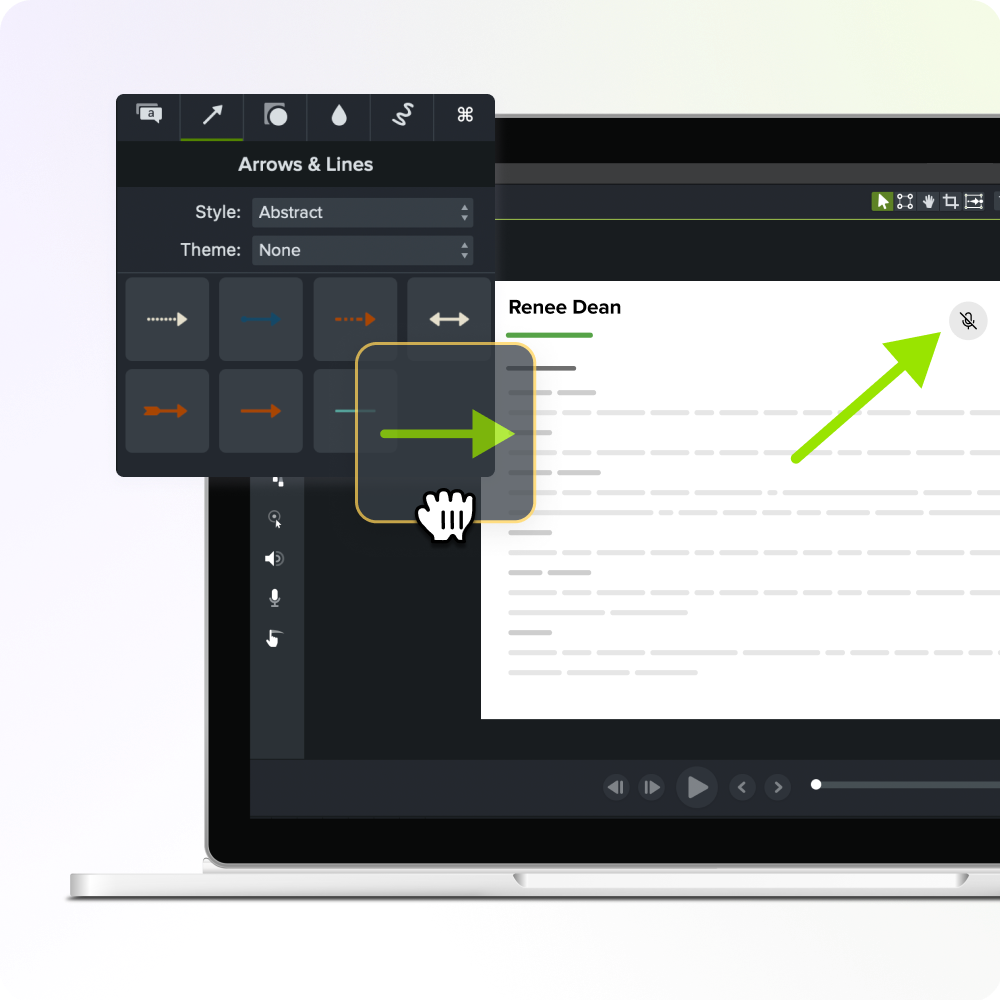
Try Camtasia Editor for free today.
Frequently asked questions
What is the best alternative to Final Cut Pro for Windows?
The strongest Windows alternatives to Final Cut Pro are DaVinci Resolve, Adobe Premiere Pro, and Camtasia. Choose DaVinci Resolve or Premiere Pro for cinematic production and Camtasia for training and tutorial videos. All three run natively on Windows without emulation or workarounds.
What is the best free alternative to Final Cut Pro?
DaVinci Resolve’s free edition is the most complete free alternative for professional editing, color grading, audio work, and visual effects. Kdenlive is a fully free open-source option, while CapCut Desktop fits quick social edits. Camtasia Editor offers a free trial with limits, then starts at $39 a year for Starter with a watermark, or $179 a year for Essentials with watermark-free exports.
Is DaVinci Resolve better than Final Cut Pro?
DaVinci Resolve is better for cross-platform teams and colorists who need node-based grading because it runs on Mac, Windows, and Linux. Final Cut Pro remains a strong fit for Mac-only editors working inside Apple’s ecosystem. Neither is purpose-built for screen-recorded tutorials and workplace training, where integrated recording and instructional editing features matter more.
Which Final Cut Pro alternative is easiest for beginners?
Wondershare Filmora and Camtasia are the easiest entry points for beginners because they reduce the friction of complex production workflows. Filmora suits template-driven general editing, while Camtasia is designed for screen recordings, tutorials, and training content. Both require less production knowledge than DaVinci Resolve or Adobe Premiere Pro.
What is the best Final Cut Pro alternative for screen-recorded tutorials and training videos?
Camtasia is the best fit for screen-recorded tutorials and training videos because it combines screen, webcam, and audio capture with text-based editing, captions, cursor effects, and reusable visual styles. It runs on Mac and Windows, allowing mixed-device teams to use a consistent workflow. Its focus is clear knowledge sharing rather than cinematic color grading or VFX.
Should I choose Adobe Premiere Pro, DaVinci Resolve, or Camtasia?
Choose Adobe Premiere Pro when your team already relies on Creative Cloud for motion graphics, image work, and audio finishing. Choose DaVinci Resolve for cinema-grade color grading, audio post, and VFX on a tighter budget. Choose Camtasia when the primary job is turning screen recordings and subject-matter expertise into clear training or tutorial videos.
Share