









You need a clean Mac screenshot for a customer response, but the menu disappears, the file lands somewhere unexpected, or the capture includes information you can’t share. The right shortcut gets the image quickly; the right workflow keeps it clear, private, and easy to find.
A screenshot is a still image of what’s on your screen. To take one on a Mac, use Shift-Command-3 to capture the full screen, Shift-Command-4 to capture a selected area, or Shift-Command-5 to open the Screenshot toolbar for window, selection, and recording options.
This guide covers those shortcuts, save and clipboard settings, and when Camtasia Snagit’s scrolling capture, redaction, and annotation tools can save you time.

Key takeaways
- Three keyboard shortcuts cover most Mac screenshot needs: full screen, selected area, and the Screenshot toolbar.
- Native Mac screenshot tools don’t offer scrolling capture, automatic sensitive data detection, and a dedicated capture library.
- Preview can handle basic markup, but it lacks step numbering, reusable templates, and built-in redaction.
- Teams documenting bugs, training steps, or processes at scale often outgrow one-off native screenshot captures.
- Structured feedback on screenshots usually requires a dedicated review platform, not scattered, unlabeled desktop files.
What exactly is a screenshot?
At its core, a screenshot preserves one moment of your screen as a still image you can revisit, share, or attach to a ticket, unlike a screen recording, which captures a sequence of actions over time.
At work, you can use screenshots to report bugs or build training steps. If an error appears, capture it before closing the dialog, then attach the image to your support ticket. A technical writer can capture one interface state to show teammates exactly where to click.
Mac screenshot shortcuts quick reference
Choose a shortcut based on how much of your screen you need to capture.
| Shortcut | Use |
| Shift-Command-3 | Full screen |
| Shift-Command-4 | Selected area |
| Shift-Command-5 | Screenshot toolbar |
Capture the entire screen or a selected area
Shift-Command-3 captures the entire Mac screen, while Shift-Command-4 lets you drag over only the area you need.
After you press Shift-Command-4, the pointer changes to a crosshair. Drag the crosshair from one corner of the required area to the opposite corner, then release the mouse or trackpad button to capture it.
Use a full-screen capture when your documentation needs the complete desktop context, such as an application layout across multiple windows. Choose a selected-area capture for a specific error message, menu, or process step. This keeps attention on the relevant detail and helps exclude unrelated information from the image.
The best snipping tool for Windows and Mac
Don’t let clumsy built-in tools hold you back. Take and edit screenshots with Snagit!
Get Snagit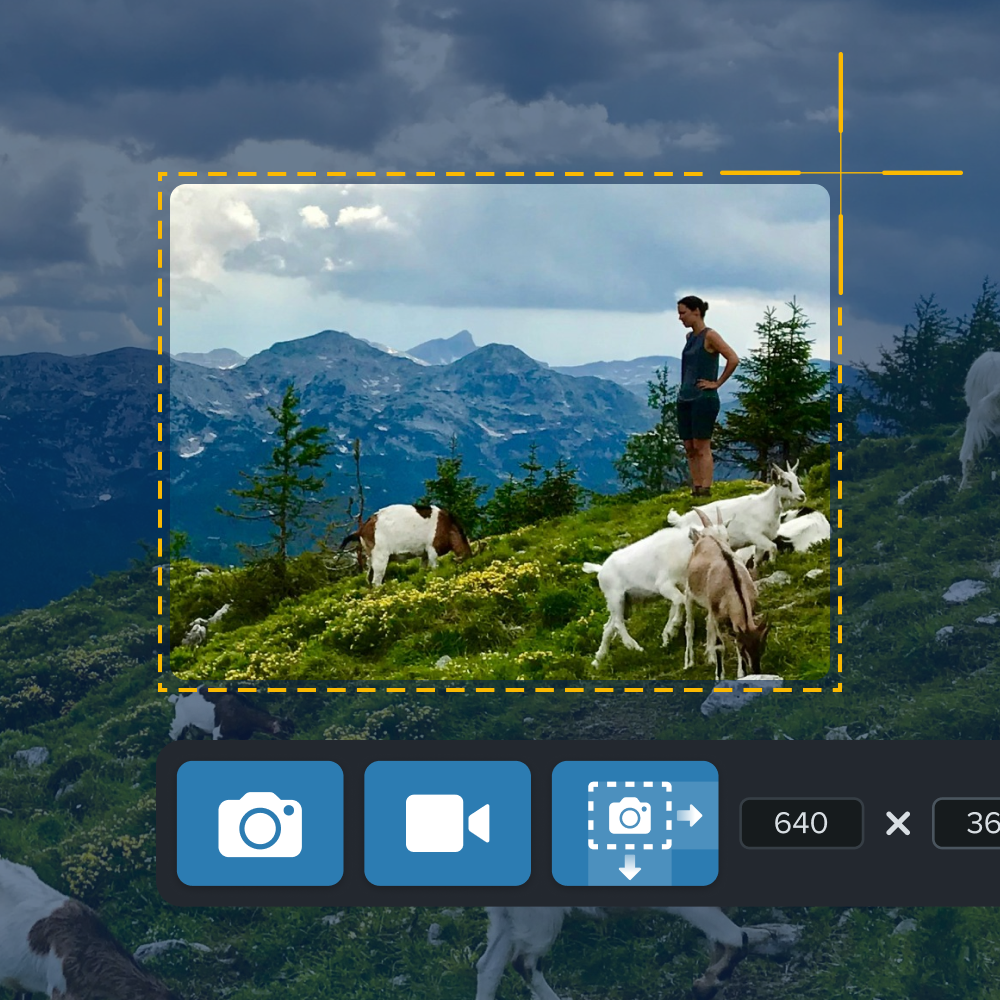
Capture a window or use the Screenshot toolbar
Press Shift-Command-5 to open the macOS Screenshot toolbar, where you can capture the full screen, a window, or a selected portion, or record your screen.
To capture one window, select Capture Selected Window, move the camera pointer over the window, and click. For a direct shortcut, press Shift-Command-4, then Space, and click the window.
Use the Screenshot toolbar when you need more control than a direct keyboard shortcut provides. Its visible controls let you confirm the capture or recording mode before you begin, which helps prevent capturing the wrong window or screen area.
Saving, clipboard, and file location tips
Mac screenshots save to the desktop by default, but adding Control to a screenshot shortcut copies the capture to the clipboard, and the Screenshot toolbar lets you change the save location. Check the desktop first if you used a standard capture shortcut.
Hold Control while taking the screenshot when you want to paste it directly into a document, message, or support ticket. For example, press Control-Shift-Command-4, select an area, and then use Command-V in the destination app.
Change the default save location through the Screenshot toolbar. Press Shift-Command-5, select Options, and choose a destination under Save to, such as Documents, Clipboard, or another location.
Use the clipboard for a temporary image you plan to paste immediately. Save a file when you need to rename, organize, edit, or reuse the screenshot later.
Where native Mac screenshots fall short
Native Mac screenshot tools work well for quick, one-off captures but can become inefficient when your team needs scrolling content, automatic redaction, repeatable documentation, or structured review.
A support agent can capture one error quickly. But a reusable team asset may also need to be redacted, annotated, organized, and reviewed. Choose a dedicated workflow when those additional steps become recurring work.
No scrolling capture or persistent library
Native Mac shortcuts capture only visible content, with no option to capture a full scrolling webpage or document, and they don’t keep screenshots in a dedicated capture library.
When you document a long webpage, you may need to take several overlapping screenshots and stitch them together. This adds editing work and can leave uneven spacing, duplicated content, or missing sections. A dedicated tool can create a scrolling screenshot as one continuous image.
Native captures also accumulate as date-stamped files on your desktop unless you change the save location. When you need to update recurring documentation, finding the correct image becomes harder. Finder can search and organize these files, but a dedicated capture library keeps that work within your screenshot workflow.
No redaction, step numbering, or sharing
Native Mac screenshot tools have no built-in redaction, so you must manually crop out or cover sensitive data before sharing. They also lack automated step numbering and a structured review workflow.
These gaps create practical risks. Customer names, account details, or internal data can remain visible. How-to guides require you to capture, arrange, and number each image manually, while feedback can become scattered across messages and email threads.
Camtasia Snagit provides a more repeatable workflow. Use Smart Redact to identify and obscure sensitive details in screenshots, then inspect the results before sharing. Use Step Capture to create a static, numbered guide, and add callouts or arrows where readers need more context. Once the content is ready, share it through Screencast so reviewers can leave structured comments and annotations directly on the image.
Annotate and edit screenshots with Snagit
Professional mark-up tools and powerful features make it easy to create helpful images.
Try it Free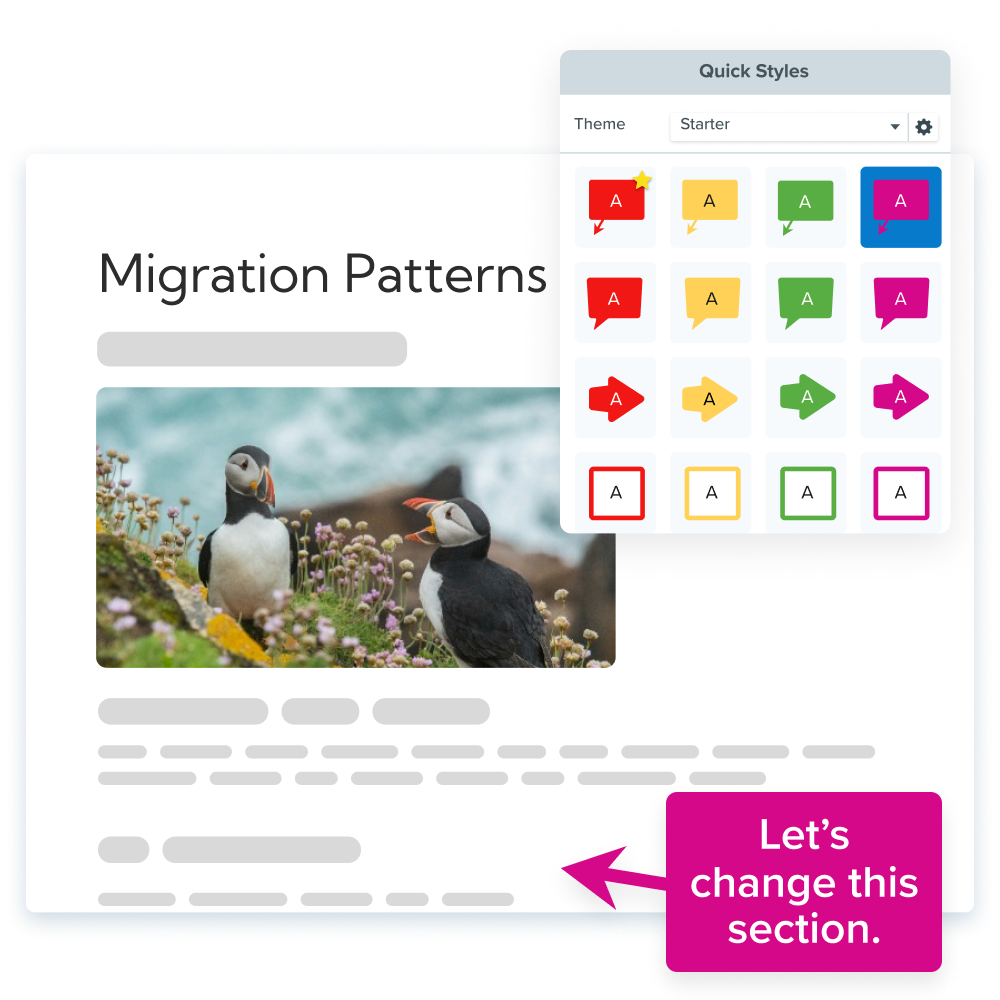
Comparison at a glance
Both native macOS tools and Camtasia Snagit support everyday captures and basic annotations. The differences become more useful when you need scrolling content, automatic redaction, or a repeatable documentation process.
| Tool | Capture type | Scrolling capture | Sensitive data handling | Editing and documentation | Organization and library |
| Native macOS tools, including Preview | Full screen, window, selected area, and screen recording | Not available through native screenshot shortcuts | Manual cropping or covering details with markup | Basic cropping, shapes, arrows, drawing, and text | Individual files organized through Finder |
| Camtasia Snagit | Full screen, window, selected area, scrolling content, and video recording | Captures scrolling webpages and documents | Smart Redact identifies and obscures supported sensitive data types | Adds numbered steps, reusable templates, and automatic process capture | Dedicated capture library for finding and reusing images |
Editing screenshots: Preview vs. Camtasia Snagit
Preview handles basic screenshot markup, while Camtasia Snagit adds automatic redaction, numbered guides, and reusable templates.
For a quick edit, open the screenshot in Preview and click the Show Markup Toolbar if it isn’t already visible. You can add shapes and text, draw, crop the image, and save the result. Apple’s official Preview documentation provides instructions for each Markup tool.
Camtasia Snagit gives documentation teams more control and consistency. Reusable visual elements keep instructions consistent across projects.
Mixed-device teams can use Camtasia Snagit to follow the same capture and annotation approach on Mac and Windows. This gives coworkers a consistent process even when they use different operating systems, like Windows.
Real workflows that outgrow native tools
Bug reports, customer-data redaction, and onboarding guides can outgrow native Mac tools because each workflow requires more than a one-off image file. Repeating these tasks across a team adds manual editing, inconsistent context, and extra sharing steps.
An effective bug report shows exactly where the problem occurred. Capture the error in Camtasia Snagit, add an arrow or callout to the affected control, and include the action that triggered it. Then send the screenshot through Screencast so reviewers can leave structured comments on the image.
Customer screenshots need a privacy check before distribution. Capture the required screen, apply Smart Redact to sensitive details in the still image, and inspect the result before sharing. Check names, email addresses, account numbers, and any information visible in browser tabs or notifications.
Onboarding documentation requires a repeatable sequence. Use Step Capture in Camtasia Snagit while completing the process, then review the resulting static, numbered guide for missing actions or unclear labels. Step Capture doesn’t create a video automatically. You can import its screenshots into Camtasia Editor when the workflow needs narration, cursor guidance, or a more detailed training video.
Build a screenshot workflow that scales
Keep native Mac shortcuts close for quick captures, such as the one-off error message you need to paste into a chat. When screenshots need more extensive editing for a training guide, support article, or onboarding document, use Camtasia Snagit to redact sensitive details and add clear annotations.
For screenshots you’ll regularly reuse, review, or update, the Camtasia Snagit Library gives you a practical home for captures and makes recurring visual work easier to manage.
To build that workflow with tools designed for capture, editing, and sharing, download Camtasia for free.
The best snipping tool for Windows and Mac
Don’t let clumsy built-in tools hold you back. Take and edit screenshots with Snagit!
Get Snagit
Frequently asked questions
Do Mac screenshots capture the mouse cursor or pointer?
Native Mac screenshot shortcuts don’t include the mouse pointer by default, so a basic capture usually shows only the app, window, or desktop content. If the pointer is important to the explanation, use a capture workflow that lets you preserve the cursor or add a callout showing where the viewer should look.
How do you screenshot a dropdown menu or tooltip that disappears when you click away?
Use a timed screenshot so you have time to reopen the dropdown menu or tooltip before the capture occurs. Open the Screenshot toolbar with Shift-Command-5, choose the appropriate capture type, set a timer from the available options, start the capture, and then open the interface element you need to show.
What file format do Mac screenshots save in, and can you change it?
Mac screenshots save as PNG files by default, which is suitable for most documentation and sharing needs. Changing the default format to JPG, PDF, or TIFF requires Terminal commands because macOS doesn’t provide a simple format selector in the Screenshot toolbar.
Is Camtasia Snagit worth it if you only take a few screenshots a week?
Camtasia Snagit can be useful even for a small number of weekly screenshots when those captures require scrolling content, redaction, annotations, step-by-step instructions, or consistent organization. Native Mac tools are usually sufficient when the screenshots are simple, disposable, and don’t contain sensitive information.
How is screenshotting different from screen recording when documenting a process on a Mac?
A screenshot captures one still moment, while a screen recording captures a sequence of actions over time. Use a screenshot for an error message, setting, or individual instruction; use screen recording when the viewer needs to see clicks, movement, timing, or a complete process. Camtasia Snagit supports screenshots and short recordings.
Share