








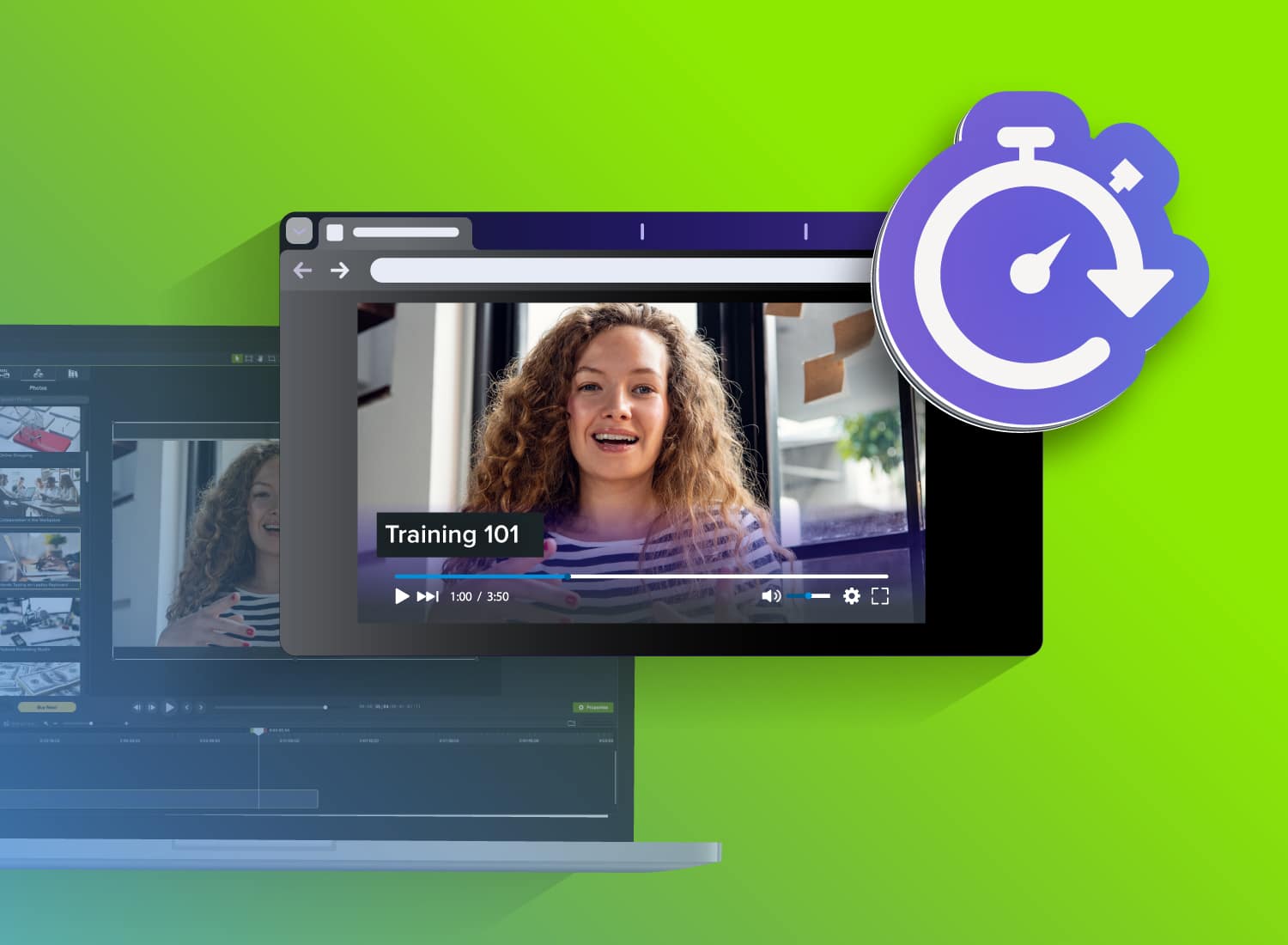
Picture this: an employee is halfway through a task when they get stuck. They don’t have time to sit through a training course or search through pages of documentation — they need an answer right now. This is exactly the kind of situation just-in-time (JIT) training is designed to solve.
Just-in-time training uses short, targeted videos to provide guidance exactly when employees need it. Instead of scheduled courses or long training modules, JIT videos help people complete a specific task, solve a problem, or learn a process quickly.
The good news is that creating effective JIT training videos doesn’t require a production team or advanced editing skills. In this guide, you’ll learn how to identify the best opportunities for JIT content, create videos efficiently, and share them through the tools employees already use, so help is always available when and where it’s needed.
Key takeaways
- Just-in-time training videos work best when they focus on a single task or question. Keeping videos under five minutes can reduce cognitive load and speed up learning.
- Identifying the learner’s moment of need — the point where hesitation, confusion, or errors occur — is the foundation of effective JIT video creation.
- Recording your screen and camera together can make training videos more engaging while keeping production efficient.
- Adding captions improves accessibility and comprehension, especially for viewers watching on mobile devices or with the sound off.
- Publishing videos where employees already work, such as an LMS, internal wiki, or chat tool, removes friction and makes content simpler to find when it’s needed.
Looking for professional screen recording software?
From simple screen captures to polished video editing, TechSmith has everything you need to create professional-quality content.
Learn More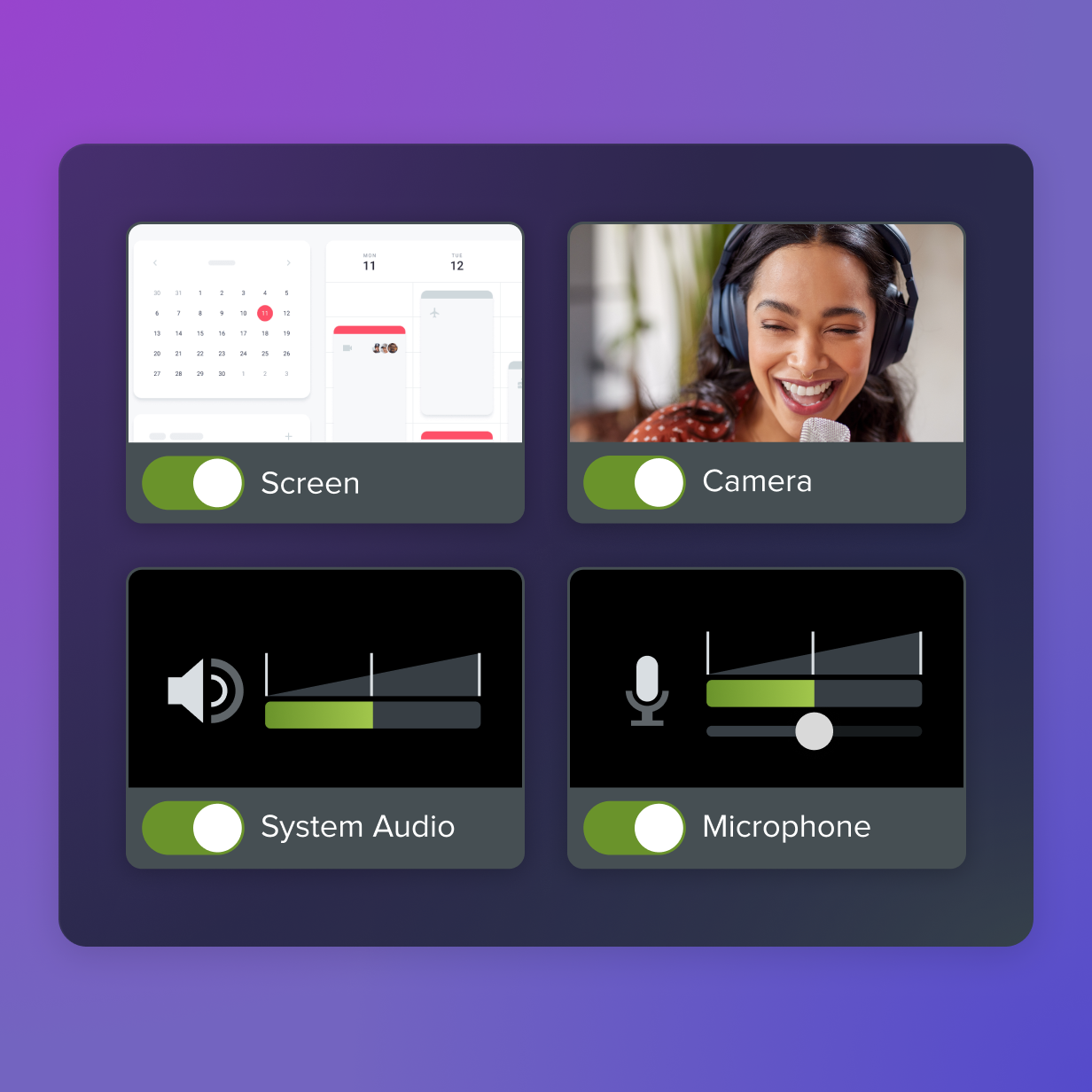
What is just-in-time training, and why video works
Just-in-time training gives employees on-demand access to the learning content they need to complete a task and keep work moving. Instead of sitting through lengthy scheduled training sessions, employees can quickly find an answer, complete the task, and get back to work. Research on just-in-time learning suggests that delivering information when it’s immediately relevant can improve learning effectiveness and knowledge retention.
Video is especially effective for JIT training because it both shows and explains a process. A quick demonstration is often easier to follow than pages of written instructions, particularly for software workflows and step-by-step tasks.
Traditional training programs help employees build broader knowledge over time. JIT videos serve a different purpose: they solve specific problems in the moment. Most are just a few minutes long, making them a fast and practical way to support learning on the spot.
When a just-in-time video beats traditional courses
Just-in-time videos work best when employees need a fast answer to a specific question. They’re especially effective for repeatable, procedural tasks such as software workflows, equipment operation, policy updates, and compliance refreshers.
A good JIT video targets a “hesitation point,” which is the moment someone pauses because they’re unsure what to do next. Examples include entering a new contact in a customer relationship management (CRM) system, submitting an expense report, completing a safety inspection, or resolving a common software error.
Unlike traditional training, which builds foundational knowledge over time, JIT videos reinforce learning during real-world tasks. They aren’t meant to replace formal training programs. Instead, they provide timely guidance that helps employees apply what they’ve learned in the flow of work. They also support knowledge sharing by making expertise easier to document, scale, and access when employees need quick answers.
Some of the best opportunities for JIT videos include:
- Rolling out software updates and new features
- Communicating policy or procedure changes
- Troubleshooting recurring errors
- Supporting first-week onboarding tasks
- Delivering compliance and safety reminders
Repeated questions in support tickets, help desk requests, and frequently asked questions often reveal the best opportunities for short training videos.
Five steps to create just-in-time training videos
Creating effective JIT videos doesn’t require a studio, a production team, or hours of editing. The most effective time-saving videos are often simple, focused recordings with a clear purpose.
Think of the process as a repeatable workflow: identify a need, record a solution, and publish it where people can find it. The goal isn’t perfection; it’s providing helpful guidance when it’s needed most.
1. Pinpoint the learner‘s moment of need
Start by identifying learners’ needs. Look for recurring questions, common mistakes, or tasks that require frequent support. Repeated help desk tickets, Slack or Teams messages, manager escalations, software updates, and workflow changes are all strong indicators that a JIT video could help.
Talk to frontline employees and team leaders to understand where confusion or bottlenecks occur. Often, the biggest productivity blockers aren’t obvious until you ask.
When determining your topic, be specific. One video should answer one question, not function as a full tutorial covering an entire process from start to finish. Framing topics as learner questions can help keep the scope focused:
- How do I reset my password?
- What’s the correct way to log mileage?
- How do I submit an expense report?
2. Script concise, action-first guidance
A quick script helps keep videos focused and easy to follow.
A simple structure works well:
- State the problem (10 seconds)
- Demonstrate the solution (60–120 seconds)
- Summarize key steps (20 seconds)
Use direct, conversational language that tells viewers exactly what to do. Phrases like “Click,” “Select,” and “Enter” are more effective than lengthy explanations.
Before recording, read the script out loud. You’ll often spot awkward phrasing, unnecessary details, and opportunities to shorten the content. For JIT training, clarity is always more important than creativity.
3. Record screen and camera in one take
To keep production fast, record your screen and camera simultaneously. Screen recordings show the task, while a small face-cam can add context and make explanations feel more personal and trustworthy.
Find a quiet space, use simple lighting, and focus on communicating clearly. Here are a few recording best practices to keep in mind:
- Close unnecessary tabs and applications
- Start from a consistent screen or dashboard
- Speak at a steady pace, slightly slower than normal conversation
- Pause briefly before and after important actions
Don’t worry about delivering a perfect performance. Minor stumbles can be edited out later. Tools like Camtasia Editor can capture your screen, camera, microphone, and system audio on separate tracks, making it easier to fix mistakes, adjust individual elements, and update content without re-recording an entire video.
Need to show your screen?
Skip the downloads. Use Camtasia online to record your screen, camera, and microphone right in your browser for free.
Start Recording
4. Edit quickly and add captions
Editing should focus on cleanup, not perfection. Remove mistakes, trim long pauses, and tighten the pacing so viewers get to the information they need without unnecessary delays. Keep enhancements simple and purposeful. Cursor highlights, callouts, and zoom effects can draw attention to important actions without overwhelming the viewer.
For even faster editing, Camtasia Audiate lets you edit video and audio by making changes to a transcript, so you can cut, revise, or clean up content by editing the text rather than scrubbing through the timeline.
Captions are equally important. They improve accessibility, support mobile viewing, and help employees follow along in noisy environments or with the sound off. Camtasia Editor includes automated captions to generate subtitles, helping improve accessibility and clarity without manual transcription.
Screencast can also streamline feedback and review cycles with subject matter experts before publishing.
Quick editing checklist:
- Trim hesitation at the beginning and end
- Remove filler words and repeated phrases
- Add captions and review for accuracy
- Highlight key clicks and actions
- Review at a faster playback speed (around 1.5x) to catch issues efficiently
5. Publish where work happens
Even the best JIT video won’t help if employees can’t find it when they need it.
Embed the videos in the tools people already use, such as existing courses within your learning management system (LMS), pinned Slack or Teams messages, or internal wikis and knowledge bases. Consider organizing videos into a simple library or playlist so related topics are easy to browse, and use clear, searchable titles that match the language employees use when asking for help.
Other distribution options include:
- Team newsletters and email updates
- QR codes posted near equipment or shared workspaces
- Microlearning assignments within your LMS
Essential design tips for bite-sized training videos
Great just-in-time training videos aren’t defined by high-end production. What matters most is clarity, consistency, and ease of use. The goal is to make videos easy to scan, understand, and revisit later.
Here are a few practical design principles that can improve usability without adding production time:
- Keep videos under five minutes, so they’re easy to consume in the middle of a task.
- Focus on one task per video to keep content searchable, reusable, and easy to reference.
- Lead with the action by skipping long intros and stating immediately what the viewer can do.
- Use a consistent visual style, including fonts, colors, and simple intro/outro elements, so videos feel like part of the same library.
- Balance visuals and narration by showing what to do and briefly explaining why it matters.
- Add timestamps for longer videos so viewers can jump directly to the step they need.
Choosing tools that streamline just-in-time video production
The best tools for just-in-time training help you move from idea to published video with minimal friction. Since JIT content is designed to answer immediate questions, speed matters. Look for software that makes it easy to capture content, edit recordings, add captions, and share videos without a complicated production process.
When evaluating tools, prioritize features that reduce time-to-publish and make future updates straightforward. Training materials often need to be refreshed as software, policies, and workflows change, so maintaining content should be just as easy as creating it.
For teams that regularly produce JIT content, the Camtasia Product Suite is designed to support the entire workflow. Camtasia and Snagit let you capture and mark up images of your screen. Camtasia Editor makes it easy to record video, trim mistakes, add callouts, apply cursor effects, and generate captions. Audiate simplifies cleanup with transcript-based editing, allowing you to edit audio and video by adjusting the text. Screencast provides a way to share videos, collect feedback, and organize content into collections.
Not every training need requires a video. For simple procedures, step-capture tools can create visual guides, screenshots, and other job aids that provide employees with another way to access information.
Regardless of which platform you choose, look for features that support speed, clarity, consistency, and accessibility:
- Screen and camera capture to demonstrate and explain in the same recording
- Drag-and-drop editing to trim mistakes and rearrange content
- Automated captions to improve accessibility and reduce manual work
- Cursor effects and callouts to clearly highlight where users should click
- Templates and reusable assets to maintain a consistent look across videos
- Easy sharing options through cloud links, exports, or LMS integrations
The right toolset should remove production bottlenecks so you can focus on creating helpful content, not managing complicated workflows.
Share knowledge faster with Camtasia
Just-in-time training videos don’t have to be complicated to be effective. By focusing on a single task, keeping production simple, and publishing content where employees already work, you can create quick-reference resources that help people find answers when they need them. Over time, even a handful of videos can grow into a valuable knowledge library that supports onboarding, reinforces training, and makes expertise easier to share across your organization.
Whether you’re creating your first short video or expanding an existing training program, the Camtasia Product Suite helps streamline the process. From screen capture and editing to captions and sharing, it’s designed to help teams create and maintain helpful training content with less effort.
See how the Camtasia Suite can help you capture, edit, caption, and share JIT training videos. Explore plans today.
FAQs
How long should a just-in-time training video be?
Most just-in-time training videos should be one to five minutes, which is usually enough to demonstrate a single task clearly without disrupting workflow.
Do I need separate software for captions?
No, Camtasia Editor includes automated captioning, and Audiate can generate transcripts and support text-based edits that make captioning workflows more efficient.
Can I update a video without re-recording everything?
Yes, you can typically trim sections, replace clips, or update callouts in an editor like Camtasia without restarting the entire recording.
What is just-in-time training?
Just-in-time training is short, focused instruction delivered when someone needs it so they can complete a task and get back to work.
What’s the best software for creating training videos?
The best software for training videos combines screen recording, editing, captioning, and sharing in a single workflow. The Camtasia Product Suite is designed to bring those capabilities together, making it easier to create and maintain training content.
Share