








If your dev team works remotely or spans multiple time zones, you already know how tough it can be to coordinate code reviews. But these reviews aren’t just about squashing bugs. They help you successfully manage projects by keeping everyone accountable and aligned.
You essentially have two options here: async video code reviews and live (synchronous) code reviews. Each has its strengths, but knowing when to use one over the other can make a big difference in how efficiently your team works together — and how fast you ship quality code.
We’ll break down the pros and cons of each method, so you can choose the right one for every workflow, project, and timeline.
What is the difference between async video and live code reviews?
Before you can pick the right approach, it helps to understand what each method actually looks like in practice.
Define async video code reviews
With async video code reviews, a dev records a video walkthrough of their code, typically using screen sharing or asynchronous video tools to highlight specific sections or explain logic.
Instead of trying to get everyone online at the same time, reviewers can watch the video at their own pace and give feedback on their schedule. This type of asynchronous communication is a huge plus for teams located across different time zones — and those trying to avoid the dreaded meeting fatigue.
Define live (synchronous) code reviews
Live code reviews happen in real time, usually over video calls on Zoom or Microsoft Teams, but they can also be in-person if you’re all in the same office. Either way, team members get together to review and give feedback in the moment.
This real-time communication approach works great when you need immediate responses or direct interaction between the code author and reviewers. It’s also an efficient way to pair program or rapidly resolve issues.
Why teams are considering async video code reviews
Remote work and distributed teams are becoming incredibly common, making async video code reviews a more practical option. Time zone differences and conflicting work schedules can make it hard to find windows of time that accommodate everyone for live sessions.
Async reviews offer a more flexible feedback cycle where developers can submit their code walkthroughs and team members can review and leave feedback at any time.
Why live code reviews remain the standard for many teams
Even with all the benefits of async reviews, live code reviews are still the go-to choice for many teams, and it’s easy to see why. Live reviews give developers a chance to ask follow-up questions, clarify suggestions, and brainstorm solutions, which helps teams stay aligned and maintain momentum.
And when you need fast answers or just want to talk through an issue, nothing beats a live conversation. These real-time interactions are also a key part of the project management process, keeping everyone aligned on code quality, deadlines, and stakeholder expectations.
Benefits of async video code reviews
Async video reviews shine in situations where flexibility and depth are top priority. Here’s why they’re such a strong option for modern dev teams.
Flexibility for distributed teams
When 22% of distributed teams say flexibility is the top benefit of remote work, you can’t deny the value of async video code reviews. Developers can record their reviews whenever it fits their schedule — no coordinating across time zones that don’t align.
Tools like Camtasia make it simple for devs to create clear, easy-to-follow videos that keep the review process running smoothly and your team productive.
Go from screen recording to polished video
A screen recording is just the start. Camtasia’s editor helps you add the callouts, animations, and edits you need to create a truly professional video.
Free Download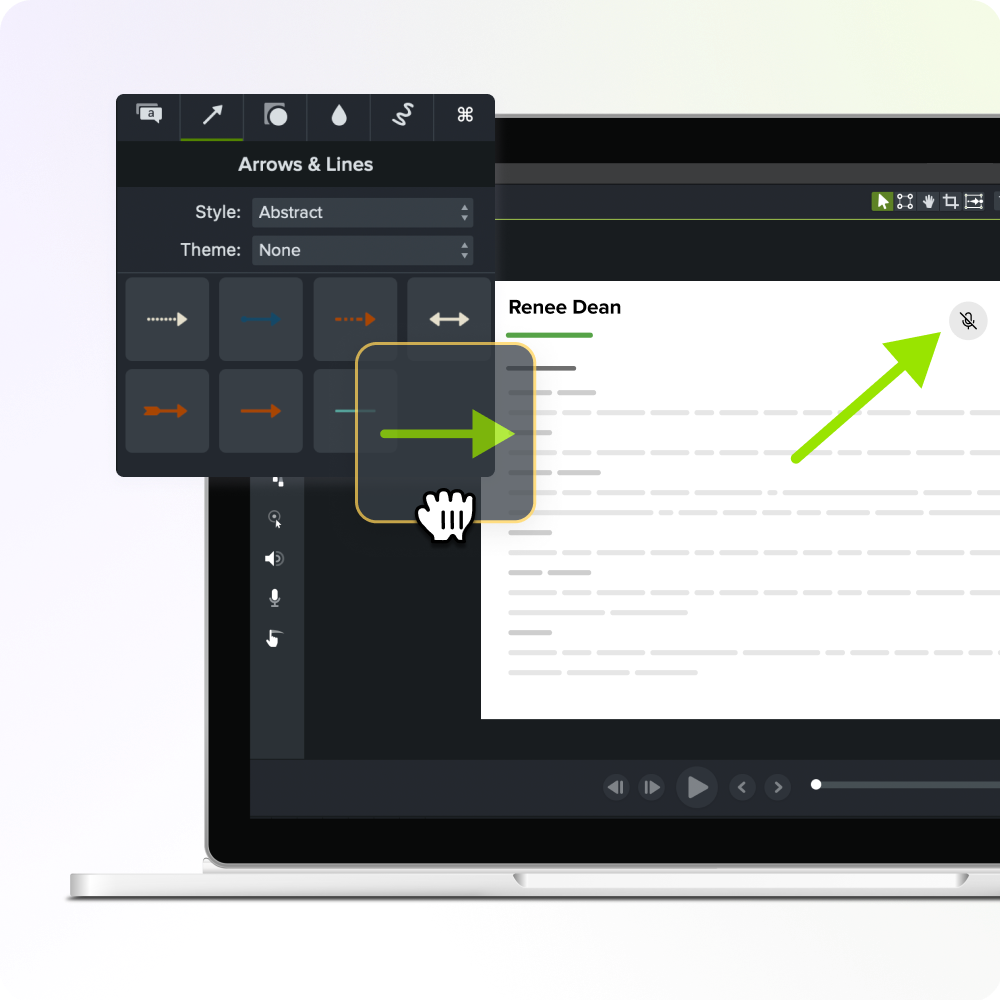
More thoughtful, detailed feedback
When you can take your time, you can give more meaningful direction and feedback. Screen recordings let developers capture precise code snippets and call out specific areas that need attention. And since reviewers can pause, rewind, and think through their responses to communicate more effectively, feedback tends to be more specific and actionable.
Plus, you can add visual markups like annotations or highlights to make complex points easier to understand, which is especially helpful when you’re reviewing tricky or layered code.
Reduces meeting fatigue
Back-to-back meetings all day, every day are productivity and motivation killers. Async video tools like Camtasia let developers batch record reviews whenever it fits their workflows, cutting down on constant meetings. It also reduces context switching, so devs can stay focused on actually developing.
Crystal-clear screen recording
Why settle for blurry screen content? Camtasia Editor’s screen recorder captures everything at up to 4K!
Free Download
Benefits of live code reviews
All that said, live code reviews bring something to the table that async reviews can’t — real-time collaboration and speed. With synchronous communication, you get:
Faster resolution of issues
The biggest advantage of live code reviews is the ability to resolve issues in real time. They give developers and reviewers a chance to surface questions, get clarity, and collaborate on fixes then and there. No back-and-forth pull request threads that drag on for days and slow down delivery.
If a developer misunderstands how a shared utility functionality should behave, the reviewer can walk them through the logic, then help them correct and confirm everything’s working, all in one session.
Better collaboration and shared learning
Live code reviews also create a natural space for collaborative problem-solving and knowledge sharing. When developers walk through code together in real time, they not only catch issues faster but can also explain decisions that aren’t obvious from the code alone.
This kind of context-rich dialogue helps junior developers understand the “why” behind architectural choices or coding patterns, making each session a learning opportunity. Meanwhile, senior engineers can model best practices, review alternatives on the spot, and guide newer teammates through complex logic.
Plus, these conversations often surface insights that might get missed in an async review, like a more efficient way to structure a loop or handle an API response — insights that might not surface in an async review. Over time, these kinds of hands-on interactions lead to stronger, more consistent codebases.
Stronger team culture and alignment
As developers review work together, they learn each other’s decision-making and coding habits, which creates mutual trust and understanding. These sessions also help establish coding norms and team-wide expectations, reducing friction in future projects.
And for remote teams, live discussions can reintroduce the kind of casual, spontaneous moments that often lead to innovations and breakthroughs. A quick back-and-forth during a review might clear up a miscommunication, spark an idea for a new pattern, or highlight a shared challenge.
These small, human moments are what keep teams aligned. When everyone feels heard and included in the review process, they’re more likely to stay engaged — not just with the code, but with the team as a whole.
Easier for complex or sensitive code reviews
Some code is just too complex or sensitive to be reviewed asynchronously. If you’re working on something with intricate logic or high-stakes impact, live sessions make more sense.
Live reviews let devs walk through the code, explain their thinking, clear up any concerns or misunderstandings, and get instant feedback. In these scenarios, real-time collaboration means developers can align quickly on decisions and maintain momentum on business-critical work.
How to choose the right code review method for your team
There’s no one-size-fits-all answer here. The best code review method depends on your team’s structure, your project’s pace, and how your developers prefer to work.
Consider team size, distribution, and availability
Async video reviews are typically ideal for teams that are spread across multiple time zones or have limited calendar space. They keep workflows moving along without the pain of trying to find shared meeting windows.
But for smaller or co-located teams with fewer scheduling issues, live reviews might be more effective, allowing for quicker feedback loops and more natural collaboration.
Evaluate project complexity and deadlines
When it comes to fast-moving projects with tight timelines, live reviews help you resolve issues quickly and stay on track.
On the other hand, if there’s no looming deadlines or you’re handling complex architecture or experimental features, async reviews give devs the space to reflect and offer more thoughtful insights.
Match your review style to the pace and depth of the project to keep quality and momentum in balance.
Blend async and live reviews for the best results
Most of the time, a blended approach offers the best of both worlds. Use async video reviews for routine or non-urgent feedback, and save live sessions for reviews that need real-time clarification or deeper collaboration.
Camtasia works great for structured code walkthroughs that don’t call for a full meeting. Pair it with Snagit for quick, ad-hoc annotations to add clarity or direction.
The best snipping tool for Windows and Mac
Don’t let clumsy built-in tools hold you back. Take and edit screenshots with Snagit!
Get Snagit
This hybrid approach gives your team the freedom to adapt based on the situation, without sacrificing clarity or code quality. It also accommodates different work styles and expertise levels, so everyone can meaningfully contribute.
Choose the best code review approach for your team
There’s no one right way to run code reviews. Choose the method that best fits your team’s structure, timeline, and collaboration style. Some situations call for the speed and clarity of live reviews, while others benefit from the flexibility and depth of async video walkthroughs. The smartest teams don’t commit to just one format — they match the tool to the task.
With solutions like Camtasia, you can create detailed, structured async reviews that reviewers can revisit anytime. For quick captures or lightweight annotations, Snagit lets you share feedback without setting up another meeting or disrupting work.
Whether you go async, live, or a mix of both, TechSmith’s tools are designed to help your team collaborate, communicate, and ship better code together.
Ready to do code reviews better? Explore TechSmith’s full suite of tools.
Share