









You’ve made an offer, and the candidate accepted. Congratulations — now it’s time to focus on the employee onboarding process.
Onboarding is the process of helping a new employee understand required paperwork, company policies, tools, role tasks, and culture so they can begin work with confidence.
Onboarding might not seem like a top priority, but an effective, engaging process pays off.
According to Gallup research, employees who have an exceptional onboarding experience are 2.6 times as likely to be extremely satisfied with their workplace — and far more likely to stay. That’s a meaningful edge to build on, especially within the critical first 90 days of a new hire’s start date.
Simplify HR workflows with visual tools
Create clear, engaging training and documentation that helps your teams better understand company policies and processes.
Learn More
Key takeaways
- Onboarding works best when the required information, culture, tools, and role-specific tasks are easy to understand and easy to revisit.
- Screenshots help new hires see where to click, what to fill out, and what a completed step should look like.
- Screen recordings turn repeated training into reusable tutorials that support employees in-office, hybrid, and remote.
- Shared video review helps HR, IT, trainers, managers, and other collaborators improve onboarding content before new hires use it.
Simplify HR workflows with visual tools
Create clear, engaging training and documentation that helps your teams better understand company policies and processes. Learn more about Camtasia solutions for human resources
What makes onboarding challenging?
Onboarding takes time because new hires need compliance information, process training, tool guidance, and culture context before they can work confidently. One of the biggest challenges to overcome in your onboarding process is boredom. Most companies share the same basic onboarding requirements. Tax forms, handbooks, policy sign-offs, I-9s, and more.
We can’t get around the compliance items in onboarding processes; however, we can make them more bearable with video.
By using video, you can entertain and inform your new employees about the organization, leadership, policies, procedures, tools, skills, tasks, and more, all while keeping employee engagement high. You can’t change a government form, but you can change how the information is presented.
How you present information shows new hires what your work environment is really like. This is even more important when you’re working with a fractured workforce (geographically dispersed, hybrid, fully remote, on-site).
How can someone who’s never been to your office get a feel for the organization from their home office? You can either show them what the environment and culture are like, or they will form their own assumptions. With a well-built onboarding program that uses video, you can set the tone for the new employee’s first day, week, month, and 90 days.
There are also onboarding challenges that come with hybrid and remote work scenarios. In-person training and onboarding may be extremely difficult due to time and location constraints. The last thing you want to do is put off employee onboarding until they can be in the office.

Onboarding programs that include visual and video components enable remote employees to begin onboarding immediately. In-person time can be reserved for topics and discussions that truly require a face-to-face connection.
How do visuals and video improve onboarding?
Visuals and video improve onboarding by showing each step instead of only describing it. Camtasia helps you capture processes, record tutorials, edit for clarity, and share content for review.
Step 1: Capture processes with screenshots
Screenshots make onboarding instructions easier to follow because new hires can see the exact form, site, tool, or software screen you want them to use. Camtasia Snagit makes it quick to grab a screenshot of whatever form, site, tool, or software you’re trying to highlight, and add clear verbal or visual cues to guide new hires along.
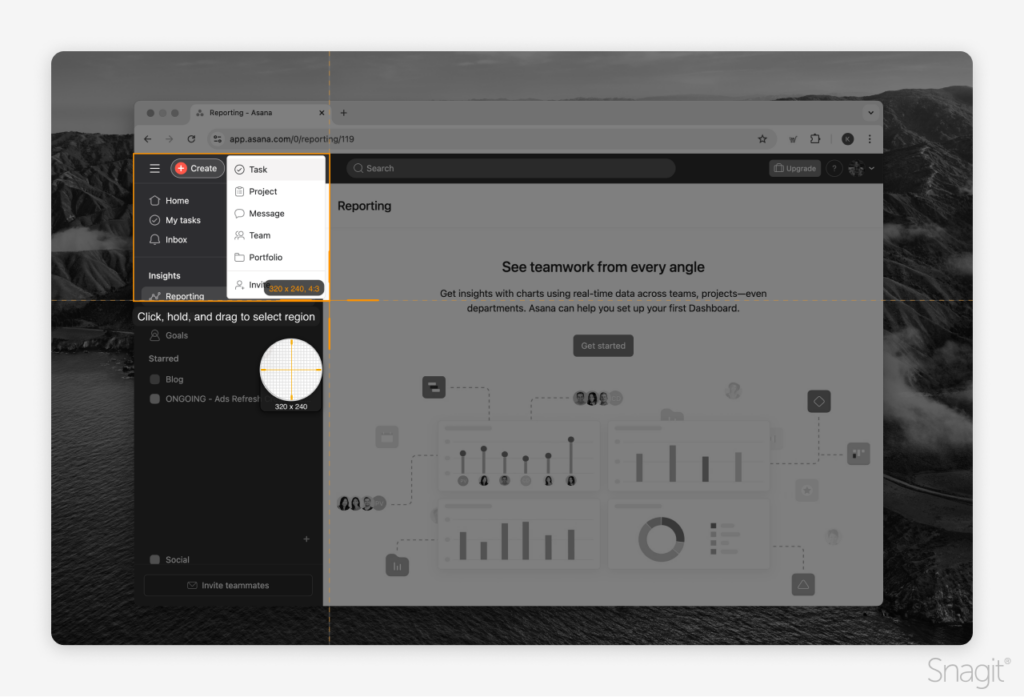
This provides your new hires with a clear and concise understanding of what they’re learning. Learn more about capturing a process with Snagit.
Step 2: Record onboarding tutorials with screen recording
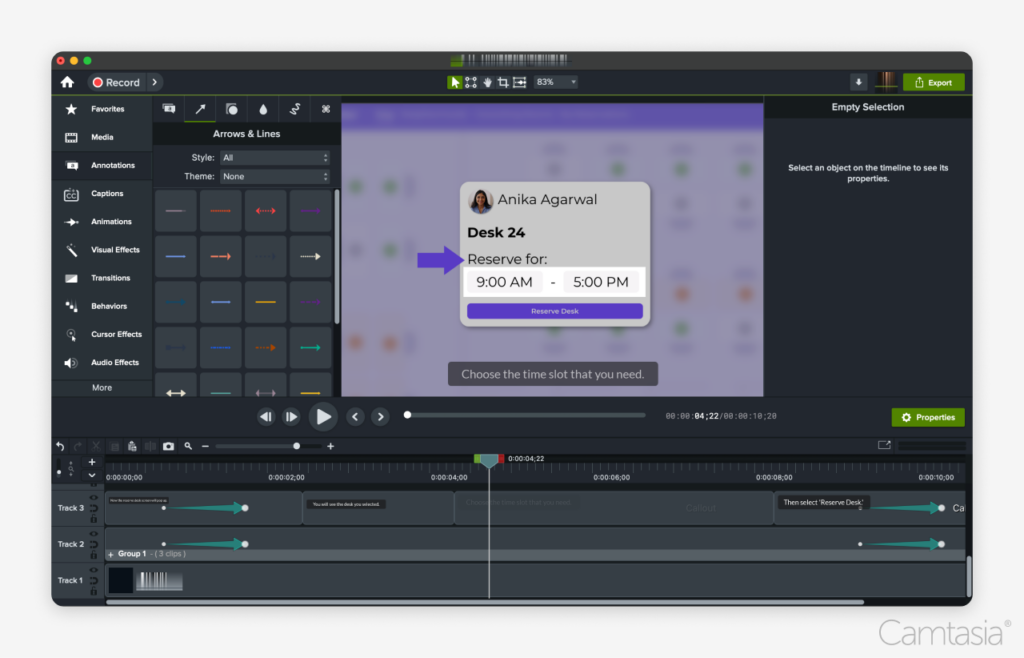
Screen recordings turn repeated explanations into onboarding tutorials that new hires can replay for a refresher. These recordings can be very simple or more robust, ranging from a simple “here is where you’ll fill out your information and sign here” to “this is how we use our robust and in-depth in-house software.”
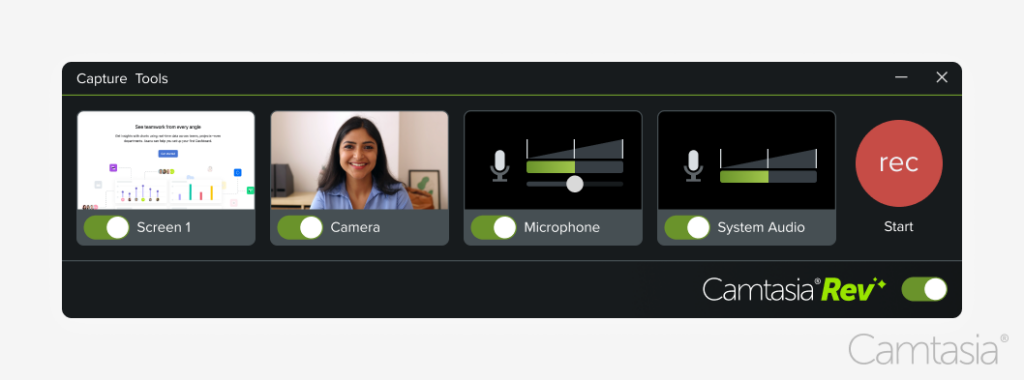
By creating quick screenshots or longer tutorials, you’re able to not only inform and entertain, but also provide them with a resource they can use for years to come. Learn more about creating a tutorial with Camtasia Editor.
Step 3: Edit and annotate for clarity
Annotations help new hires focus on the important part of the screen at the right moment. Additionally, when creating tutorials, you can use the many tools available in Camtasia Editor to draw attention to specific items.
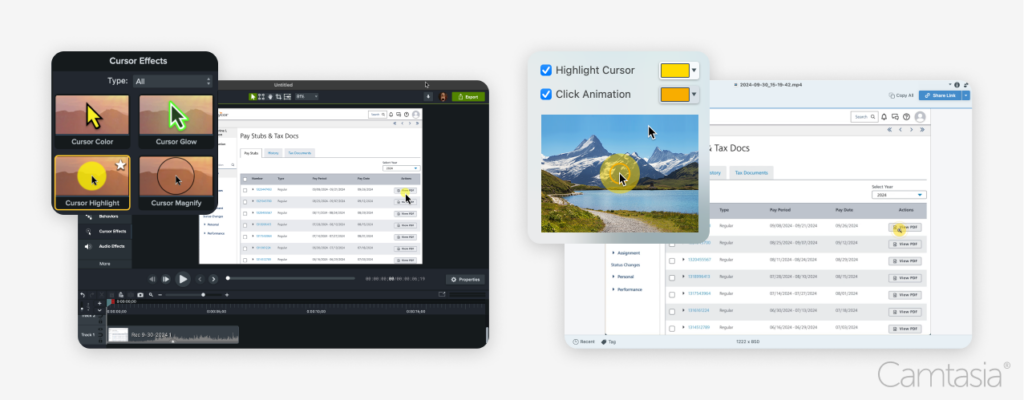
What onboarding content can you create with Camtasia?
You can create onboarding content for company-wide introductions, role-specific tasks, building navigation, and new-hire reference materials.
General welcome videos
General welcome videos give new hires a consistent introduction to the people and values that shape your company, featuring leadership or other key voices within the organization.
Task-specific video tutorials
Task tutorials are useful when a new hire needs to complete a form, learn a tool, or follow a repeatable process.
- Digital time-clock training
- Requesting time-off training
- Filling out tax forms: intro and overview
- Benefit enrollment assistance
- Company history overview video
- Company values overview video
- Enhance your employee handbook with visuals and video
- So much more
Individualized welcome videos
Individualized welcome videos help managers and team leaders greet each new hire in a more personal way.
Individualized building maps
Individualized building maps can help new hires find the spaces and resources they need for their specific role, highlighting what matters most for their day-to-day work.
How can new hires use Camtasia during training?
Giving your new hire access to visual communication tools can help them capture, review, and explain what they are learning.
- Recording Zoom meetings with others when being trained
- Allowing them to review previous training
- Creating their own individualized workflows
- Creating quick video guides to common tools and tasks
- Create videos to share with your manager/trainer/lead showing them what you’re struggling with in new systems or any issues you run into
Onboarding content checklist by timeframe
Use this checklist to decide which onboarding materials to create first. Start with the items a new hire needs immediately, then build reusable resources for the first week, first month, and 90-day support.
- Before day one or on the first day: general welcome videos, company history overview videos, company values overview videos, tax form overviews, policy sign-off guidance, and individualized building maps.
- During the first week: digital time-clock training, time-off request tutorials, benefit enrollment assistance, tool walkthroughs, and task-specific screen recordings.
- During the first month and 90-day period: employee handbook visuals, role-specific reference videos, new-hire-created workflows, and quick video guides for common tools and tasks.
How can teams share and review onboarding content with Screencast?
Teams can use Screencast to share onboarding videos, collect time-specific feedback, and improve content before it reaches new hires. Typically, onboarding is not a one-person show.
When developing your onboarding process, there will likely be several collaborators working alongside you. People from various areas of the organization, such as HR, IT, training, learning and organizational development, facilities, security, senior leadership, and many more. This collaboration is pivotal in creating a well-rounded onboarding experience.
Likewise, collaboration is imperative when creating videos. By using a tool like Screencast to share your onboarding videos, you can also use its video review features. The video review feature will let you share your video(s) with your collaborators and enable them to provide asynchronous, time-specific feedback within the video.
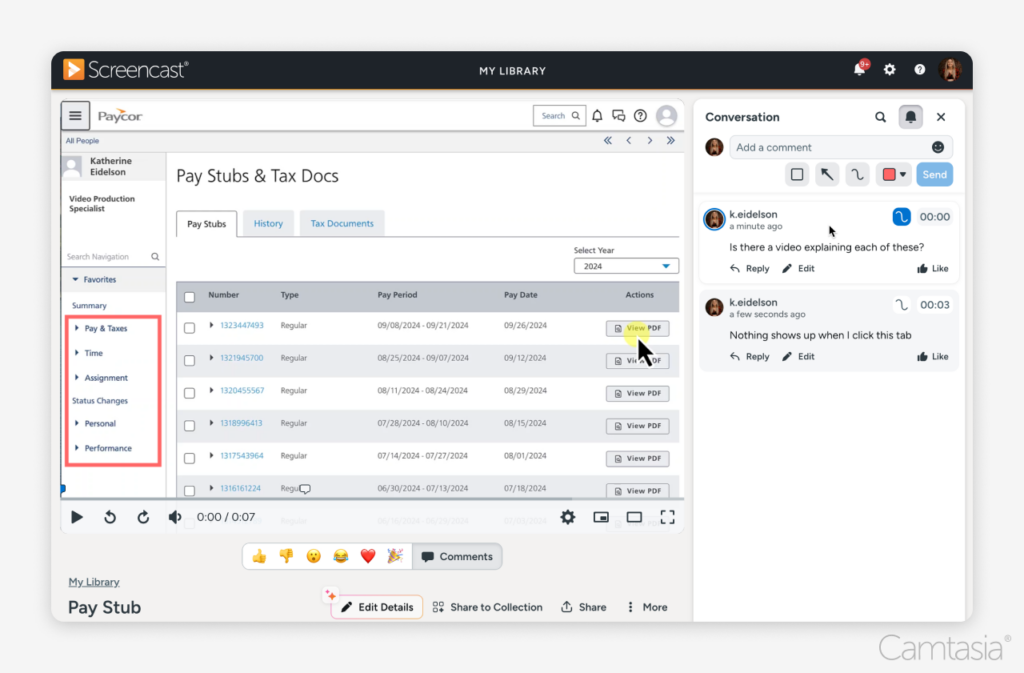
This not only allows for smoother creation of tutorials, as you can collaborate asynchronously, but also delivers a better overall end product for your new hire, creating a better employee experience.
When creating videos, tutorials, and screenshots, it is important that they can also be integrated into existing systems. With any of the content you make using Camtasia, you can seamlessly integrate them into existing LMS (Learning Management Systems), slideshows, SharePoint sites, etc. Keeping your new hire in as few systems as possible while learning should be a cornerstone of your onboarding strategy.
Why use Camtasia for repeatable onboarding content?
Reusable walkthroughs and tutorials reduce the need to repeat the same live training for every new hire. Another challenge that comes when onboarding new employees is getting all parties involved while still allowing for colleagues to get their work done.
Build your next training video with Camtasia
Record your screen or camera. Then, use the video editor to add polish and clarity.
Learn More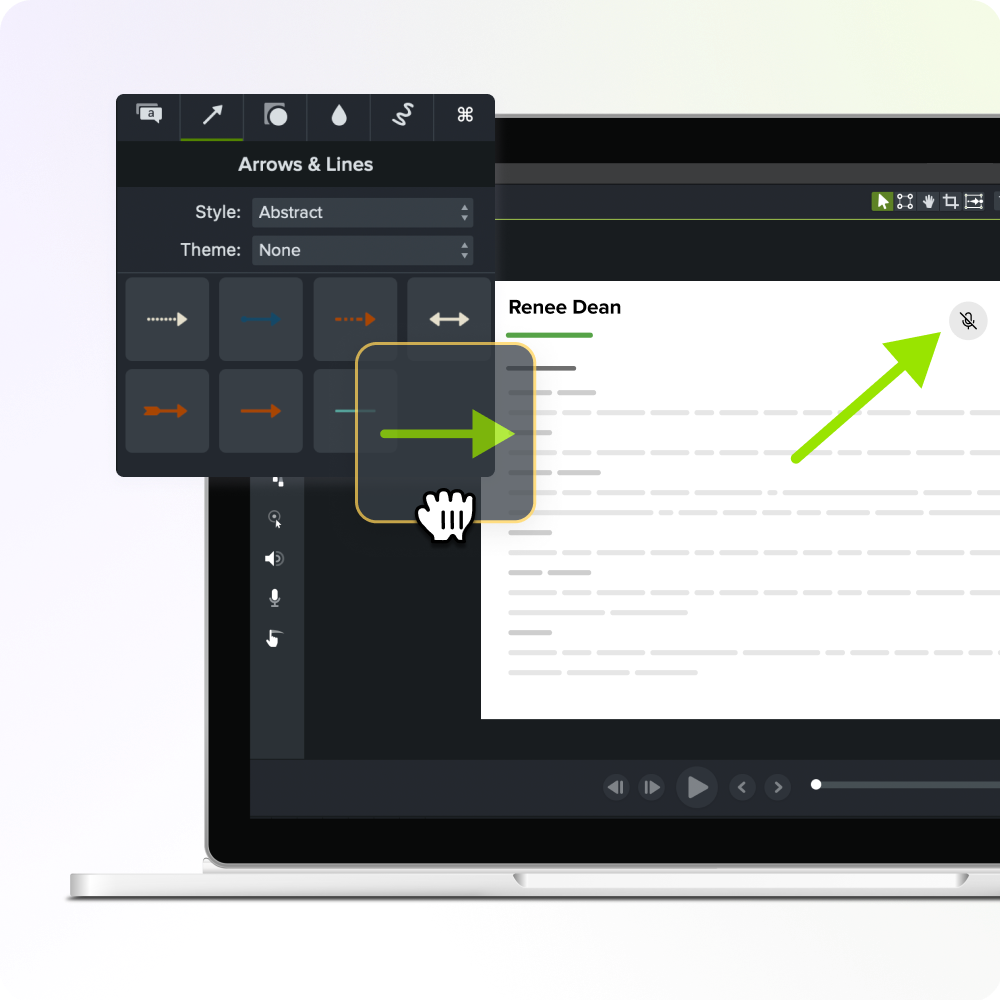
The likelihood that every presenter and every subject matter expert will be available on the same schedule is low.
With Camtasia, you can create walkthroughs, tutorials, and videos without coordinating everyone’s schedules. Presenters can pre-record their material well in advance and still make a great impression. This keeps business moving, since you don’t have to halt operations to onboard new employees.
The result works well for everyone involved.
Build your next training video with Camtasia
Record your screen or camera, then use Camtasia Editor to add polish and clarity. Whether you’re capturing a quick walkthrough or a longer tutorial, Camtasia gives you everything you need to create onboarding content your new hires will actually use.
Learn more about building corporate training videos with Camtasia
Record your screen with Snagit
Snagit makes it easy to share quick updates and how-to’s by capturing exactly what’s happening on your screen.
Get Snagit
Conclusion
Whether you have a formal “Onboarding Program” or an onboarding checklist, or even if you just have “a new hire’s first day,” either way, you’re either driving up your long-term employee retention rate or driving up your attrition rate.
Creating an onboarding program is more effective for your audience (new hires), more time-efficient for contributors, more resource-efficient for new employees, and a more entertaining way to bring someone into your organization and company culture. It can also help relieve some of the anxiety that new hires feel when joining a new work environment and allow them to focus on their job duties and on where they fit within the organization’s different roles and responsibilities.
Camtasia can help even a novice video creator build, review, and deliver videos, walkthroughs, and tutorials for new employees. Start with one repeated onboarding task, record it clearly, and turn it into a resource your next new hire can use right away.
If you don’t know where to begin with video, explore Camtasia for your video needs. The tools are powerful yet user-friendly, and Camtasia also offers certification programs, tutorials, and webinars to help you get comfortable with the software.
Try Camtasia free with a trial download.
Frequently asked questions
Why does employee onboarding take so long?
Employee onboarding takes time because new hires need to complete required forms, understand policies, learn tools, meet people, and build context for their role. HR, IT, managers, trainers, facilities, and other teams may all contribute to that process. Reusable screenshots, screen recordings, and videos can reduce repeated live explanations while still giving new hires clear resources to revisit.
How does video improve onboarding?
Video improves onboarding by showing new hires what to do, where to click, and how a process should look in practice. Screen recordings can demonstrate software, forms, and workflows step by step, while captions, highlights, and zooms make important details easier to follow. Video also gives new hires a resource they can pause, replay, and review at their own pace.
What is the difference between orientation and onboarding?
Orientation is usually the first introduction to required forms, policies, logistics, and basic company information. Onboarding continues beyond that initial introduction and includes role training, culture, tools, relationships, and ongoing support. A strong onboarding process helps the new hire move from first-day setup to confident day-to-day work.
How long should onboarding support new hires?
Onboarding should support new hires beyond the first day. The article’s examples focus on the first day, first week, first month, and 90-day period because new hires need different information at each stage. Reusable videos, screenshots, and checklists help them revisit important information as their questions become more specific.
Share