









There’s a common, yet often overlooked, issue in workplace training. Employees, whether new hires going through onboarding or long timers checking out a new software, are expected to perform well without being given all of the training they need to succeed. Insufficient training chips away at employee confidence, performance, and ultimately, business success. When employees aren’t set up, it makes it hard for them to perform at their best.
Employee training is a long-term investment in your people and organization. It builds context, confidence, and consistency, which are three things every employee needs to perform at their best. When employees are equipped with the correct training materials, they learn the “what” and “how”, which is crucial, but also the “why,” which gives them an extra boost of motivation. Without that foundation, even your most talented people can struggle.
Let’s explore how you can spot when a lack of proper training is holding your team back and how you can fix it, without overloading your trainers or investing too many resources.
How to spot a lack of training in your organization
A gap in employee training doesn’t always show up in obvious ways. You wouldn’t be here if it did! Sometimes it’s small, recurring hiccups that hint at deeper issues in the work environment.
Onboarding takes too long or is inconsistent across teams
When onboarding varies by department or relies on individual team leads to deliver everything by memory, new hires can experience vastly different learning experiences. Face-to-face or unstructured onboarding often leads to missed details and wasted time for everyone involved.
A more consistent training program ensures that all employees receive the same essential information and understand expectations from the start. It also helps reinforce your company culture and sets the tone for long-term job satisfaction.
Performance is uneven or slow to ramp
If you notice some employees quickly reaching productivity while others take significantly longer, it could be due to a lack of training on their specific skills. When team members don’t receive the same development opportunities, they’re often left to learn on the fly, which isn’t ideal for fast-paced or detail-oriented roles.
Effective training ensures that every employee, regardless of background or department, has the tools they need to succeed. It reduces time-to-competency, improves consistency, and boosts employee engagement.
Trainers and team leads are stretched thin
If your most experienced people are frequently pulled away from their work to provide live walkthroughs or answer basic how-to questions, that’s a sign that institutional knowledge hasn’t been captured in a scalable way. Your subject matter experts (SMEs) should be able to share their knowledge with others without it affecting their productivity.
By creating training content that can be reused, like screen recordings or step-by-step tutorial guides, you allow SMEs to focus on higher-value work, which will ensure that training needs are met across the board. Your SMEs have specialized knowledge for a reason, and it’s in everyone’s best interest that they continue developing it without constant interruptions.
Plus, interruptions can be costly to teams. TechSmith’s 2024 Workplace Flexibility Trends Report calculates that the lost productivity cost of six unwanted interruptions for a company with 1,000 employees sits at $1 million. That’s a huge amount of productivity lost to questions that could be solved with training videos or static guides.
The cost of poor training over time
It’s easy to overlook small inefficiencies, but the effects of ineffective training compound quickly. What seems like a few missed steps here and there can evolve into much more costly challenges for your organization. That’s why it’s best to spot these small hiccups before they turn into big issues.
Burnout and disengagement increase
When employees feel underprepared or unsupported, stress levels rise. They may hesitate to ask for help repeatedly, leading to frustration and a sense of isolation. Over time, this undermines employees’ mental health, decreases job satisfaction, and contributes to burnout.
Scalable training positively affects employees twofold: it helps reduce questions asked and gives new hires the confidence to do things on their own. When people feel supported, employee morale and retention naturally improve.
Knowledge silos become a business risk
If only a handful of people know how to complete essential tasks, your organization is vulnerable to delays anytime those individuals are taking some time off or leaving the company. If Steve is the only one who knows how to calculate an ROI on a specific campaign and then decides to take a one-month backpacking trip, your employees will be stuck until he comes back to help them out. That’s a roadblock that can be quickly and easily fixed.
Employee turnover becomes disruptive when workplace training isn’t shared or documented effectively. Breaking down knowledge silos through reusable training materials ensures business continuity and reduces dependency on individual team members.
A quick screen recording of how to complete a process can be made by Steve before his backpacking trip, which he can then share with the team. Now everyone will be able to refer to his video while they work to figure out how to calculate that pesky ROI.
Camtasia’s screen recorder is especially useful for these situations because Steve will be able to edit the video to highlight key information along the way. He can add a highlight and click animations to his cursor, zoom and pan animations from one step to another, and callouts with extra information along the way. That way, everyone will be able to follow his tutorial without missing a beat.
Go from screen recording to polished video
A screen recording is just the start. Camtasia’s editor helps you add the callouts, animations, and edits you need to create a truly professional video.
Free Download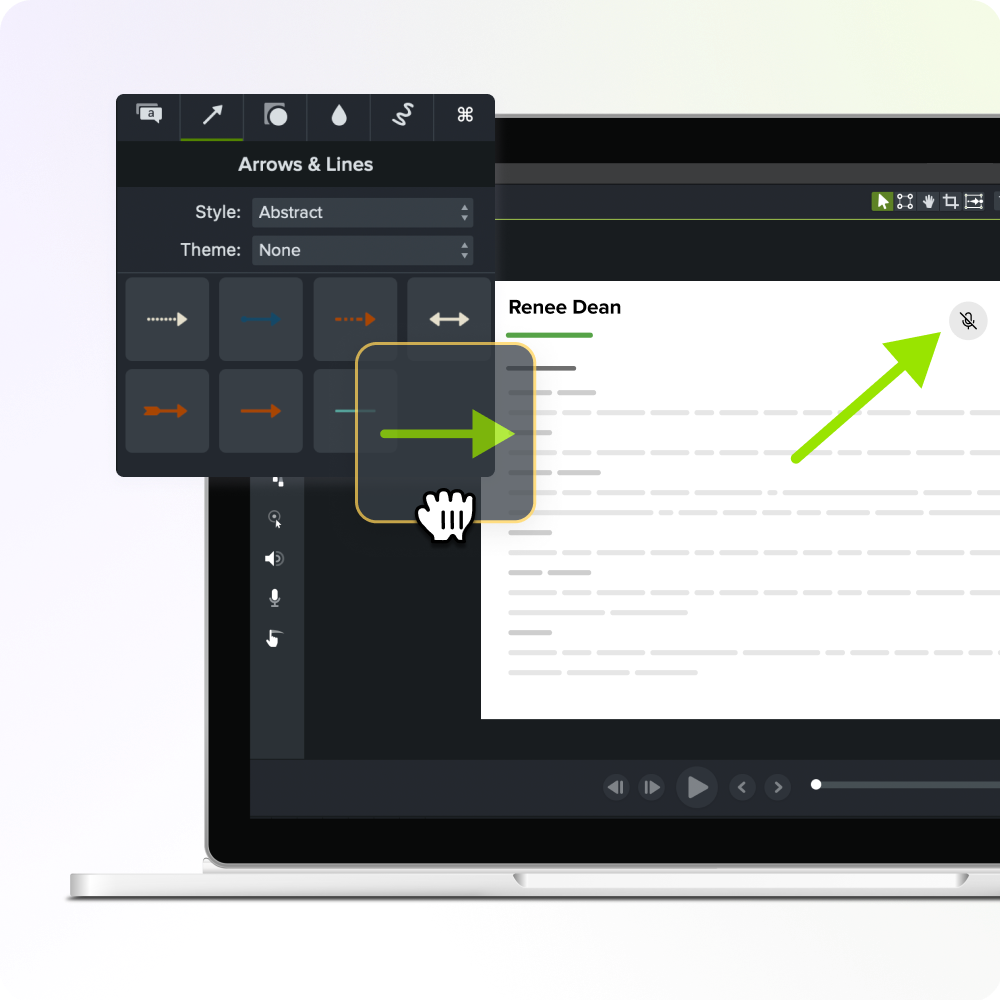
Teams waste time reinventing processes
Without clear, accessible documentation, different teams may approach the same task in different ways, or worse, spend hours trying to figure it out from scratch. This eats into productivity and increases the risk of errors, miscommunication, and poor customer satisfaction.
Centralized, visual training programs can help teams align around best practices and avoid duplicating effort.
A centralized knowledge base like Screencast is the best way to keep videos in individual collections so each team has access to the videos that pertain to them, and marketing doesn’t have to dig through IT’s pile to find what they need.
How to solve training gaps with reusable content
Fixing training gaps doesn’t require building a massive learning management system (LMS) or hiring a dedicated training department. You can start small with a few simple tools and the know-how inside your team.
Create short, visual employee training content like screen recordings, walkthroughs, or video tutorials to dramatically improve knowledge sharing while reducing the time trainers spend in live sessions.
Beginner-friendly tools like Camtasia and Snagit make it easy to capture and share this content in a repeatable, polished format.
Record repeatable tasks once for ongoing use
Instead of giving the same Zoom walkthrough every week, record it once. Show the process in action, add narration or annotations, and make it available on demand. This practice lets learners revisit it as needed and helps ensure no details are lost.
New employees or employees who just need a refresher on a specific topic can watch the video and follow along instead of taking up an SME’s time with their questions.
There are two main ways trainers can capture a process for reuse. The most popular is to make a video. A quick walkthrough can be made with a free tool like Camtasia online. With this tool, trainers can record their screen and choose to record their camera and voice as well. The flexibility of a free, web-based tool is perfect for short tutorials that don’t need a lot of editing.
Another popular visual medium is a step-by-step guide. Snagit’s step capture takes a screenshot every time you click your mouse and then compiles the images into an editable, sequential guide. It even comes up with a title and short description for each. It’s a perfect tool to create step-by-step tutorial guides without any editing or screenshotting on your part.
The best snipping tool for Windows and Mac
Don’t let clumsy built-in tools hold you back. Take and edit screenshots with Snagit!
Get Snagit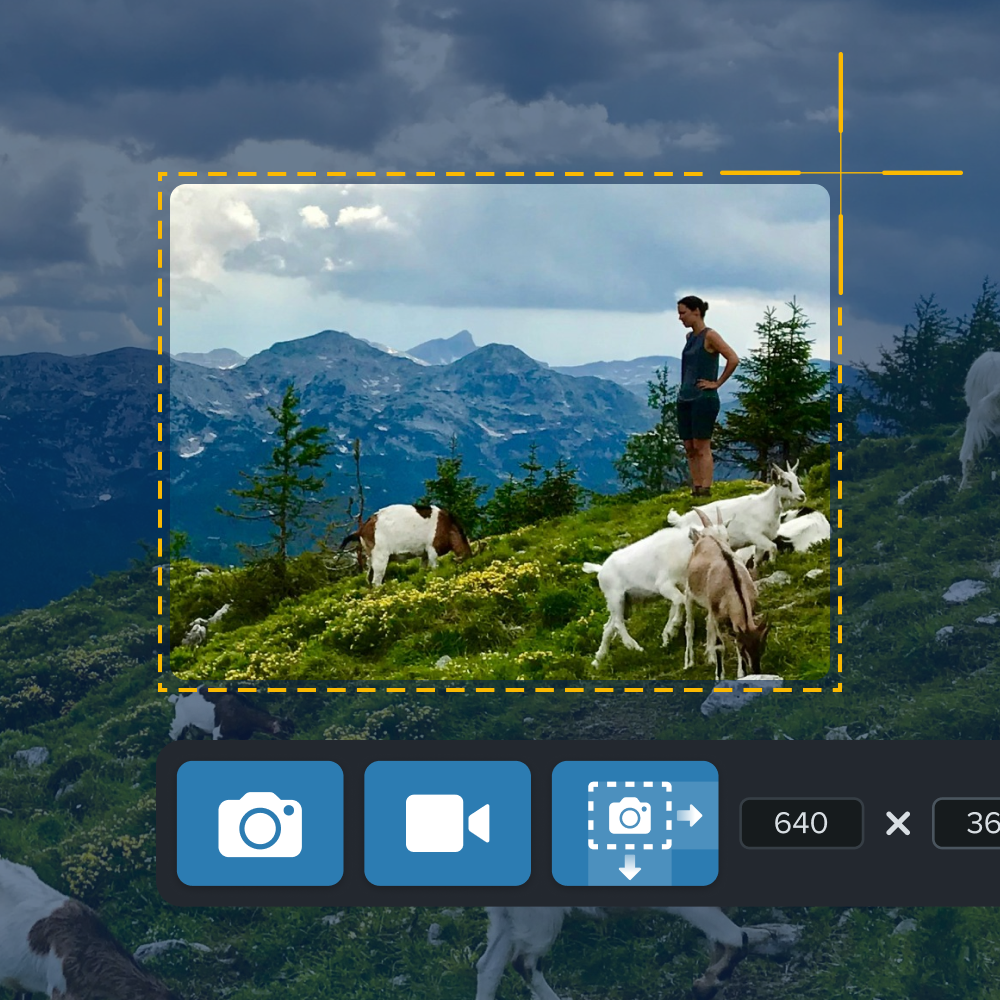
Make content specific to roles or workflows
Generic, company-wide training opportunities only go so far. The most effective training is tailored to the specific needs of each role or department. Your content writer will probably not need to know how to complete an IT-specific process and vice versa.
Instead of creating a separate tutorial for each person, you can still create one big tutorial and just break it up into role-specific segments during the editing process.
A multi-track screen recorder like Camtasia is the perfect tool for this process. With Camtasia, users can edit the screen recording, camera, audio, and cursor on separate tracks, which means users can tweak just about anything about a segment without altering the rest of the video. Change the voiceover to be more role-specific or cut out sections of a screen recording if it’s not relevant for certain team members. Flexibility is the key here.
Use collections or tags to keep content findable
Even the best training content is useless if people can’t find it anywhere. Organizing your content by topic, task, or team is key. With Screencast, an integrated part of Camtasia, you can group videos into collections and automatically generate titles, descriptions, and transcripts for each video. Add tags to each video to make it even easier for your team to search for specific training content.
This makes it easier for team members to search, access, and reuse content, which saves time and prevents knowledge decay over time.
Keep videos short and actionable
When training employees, shorter is usually better. TechSmith’s 2024 Video Viewer Trends Report found that 35% of video viewers chose 3-4 minute and 5-6 minute long instructional videos as their preferred length.
Break content into bite-sized pieces that address specific tasks or challenges instead of lumping them all together in an hour-long video. By keeping videos more concise and modular, team members can learn at their own pace, and it makes it easier for trainers to update content over time. However, ideal training video length does depend on topics, so don’t cut corners to meet a specific time frame if you need to share more.
Examples of scalable employee training in action
It can be hard to know where to get started, so we came up with a few common scenarios where short, reusable training content can have a big impact on employee development and performance.
Product onboarding and software tutorials
Help new hires get comfortable with the tools they’ll use every day by recording walkthroughs. Whether it’s your HR portal, CRM, or help desk software, seeing the steps in action makes learning faster and more intuitive.
Internal SOPs and repeatable tasks
Tasks like filling out reports, updating dashboards, or managing inventory often follow a standard process. Capture these once in a screen recording and share them in a central location. This improves consistency and the risk of workplace accidents or errors in fields like healthcare, safety training, or manufacturing.
Customer support training
New support representatives often need help understanding systems, workflows, or handling common issues. Quick videos showing how to escalate a ticket or respond to specific queries help reduce ramp-up time while boosting customer satisfaction.
Build a stronger, more supported team with better training
A lack of training can reflect poorly on team output and business outcomes. It’s time to squash this issue by creating a scalable training program. You’ll save time, build employee confidence, improve retention, and strengthen the entire organization with just a few quick changes.
Short, visual content helps teams preserve institutional knowledge, speed up onboarding, and reduce the strain on SMEs. It creates a more resilient, adaptable workforce, ready to take on new technologies, new skills, and changing business needs.
With TechSmith’s tools, Camtasia, Snagit, and Screencast, you can quickly create and share reusable training videos, walkthroughs, and SOPs that support your team without adding to your workload.
Share